Drive-Up Storage Cost vs Indoor Units: 2026 Price Comparison |
| HOW MUCH DOES DRIVE-UP STORAGE COST COMPARED TO INDOOR UNITS
⏱ 13 min read ·
📄 #2,523 words
Drive-up storage costs 10-30% less than indoor units and 30-50% less than climate-controlled. See exact prices, size comparisons, and when each type works best.
|
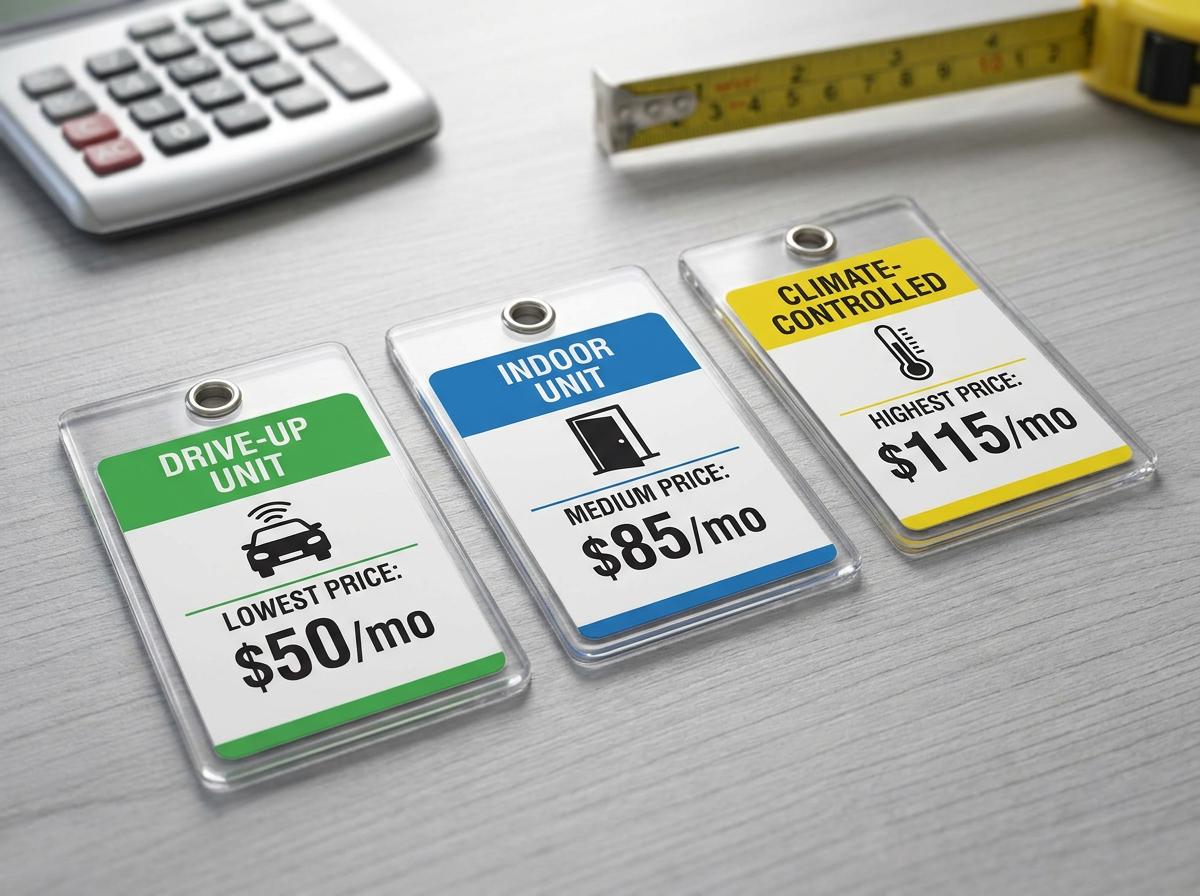
D rive-up storage units typically cost 10 to 30 percent less than indoor hallway units and 30 to 50 percent less than climate-controlled indoor units. For a standard 10x10 unit, expect to pay $90 to $120 per month for drive-up access versus $115 to $160 for indoor climate-controlled storage in most suburban markets across the United States.
| Key Points: | |
|---|---|
| • | Drive-up units cost $135 to $595 per month at Moriches Storage, ranging from 5x5 to 10x30 sizes |
| • | Climate-controlled indoor units add 20 to 50 percent to monthly rent versus standard drive-up |
| • | The national average for standard storage across all sizes is approximately $85 per month |
| • | Drive-up access eliminates elevator fees and building maintenance costs passed to renters |
| • | Long Island South Shore prices run higher than national averages due to real estate costs |
Drive-Up vs Indoor Storage: Complete Price Comparison
Understanding the price difference between drive-up and indoor storage requires examining what drives costs at each facility type. According to Extra Space Storage's 2026 pricing guide, the national average storage unit cost sits around $85 per month, with significant variation based on access type, climate control, and location.
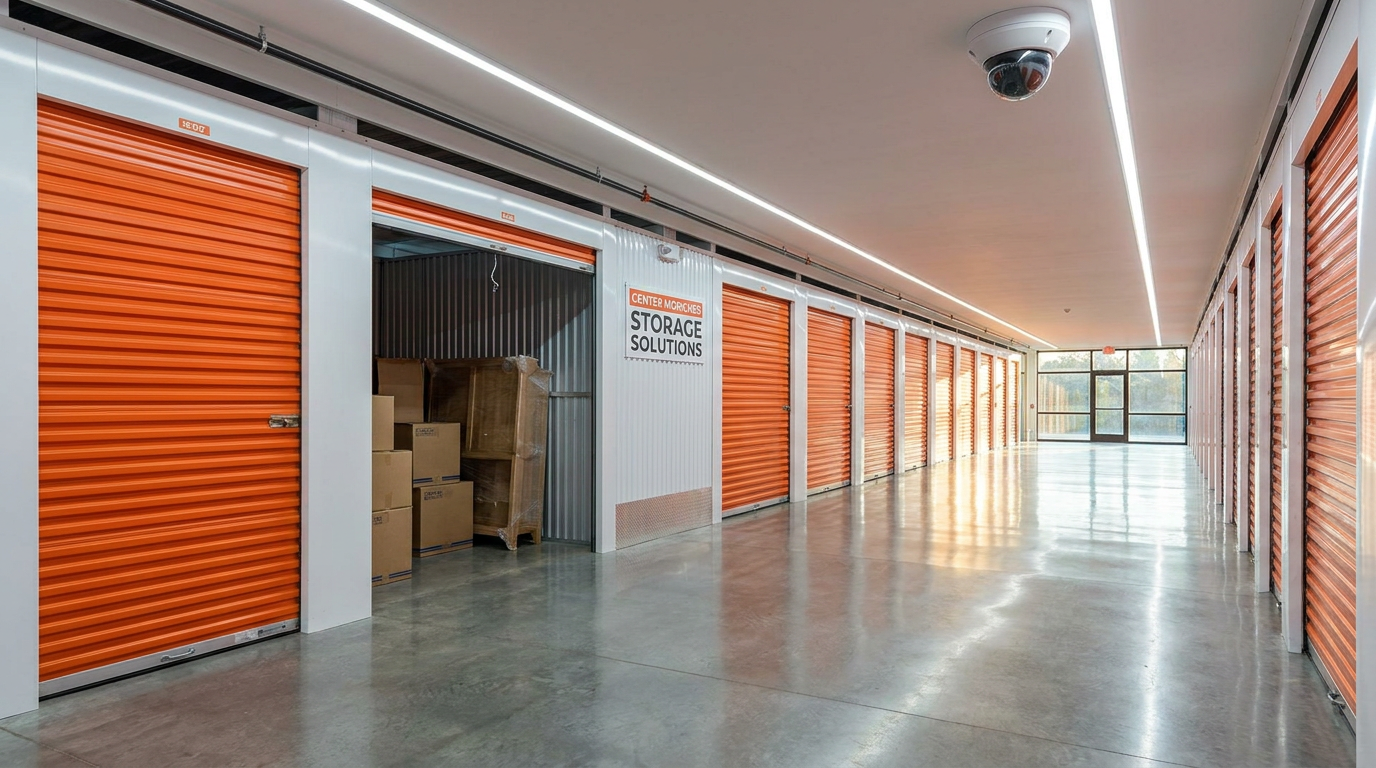
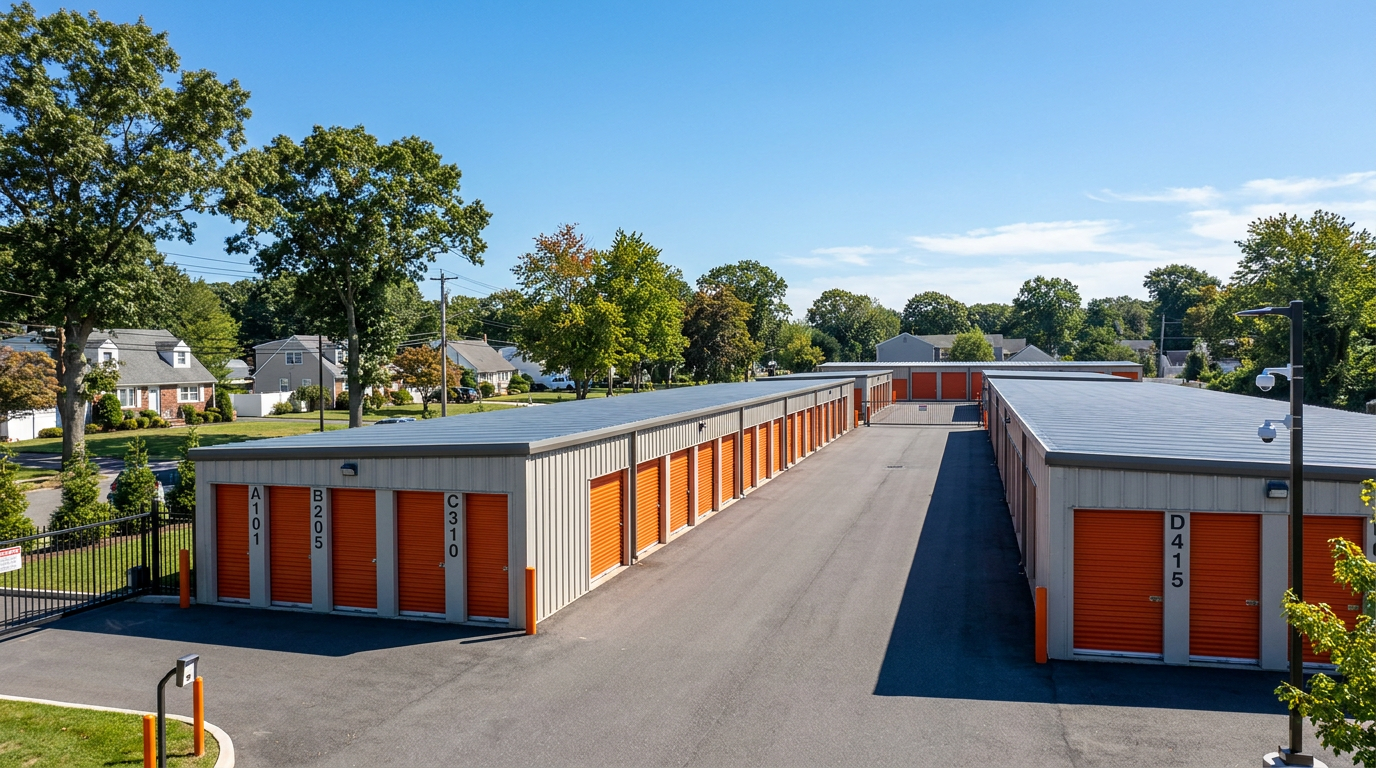
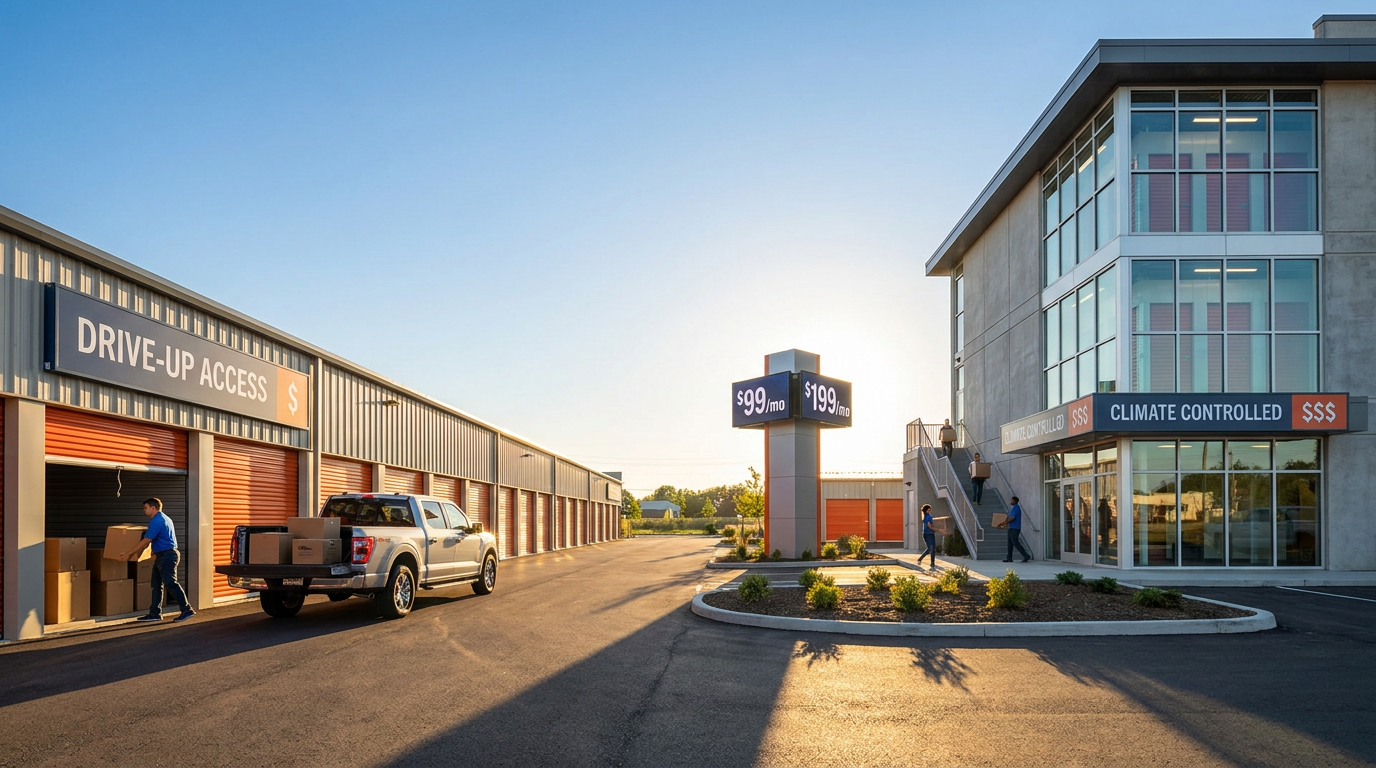
Drive-up units consistently rank as the most affordable option because they require less infrastructure. Single-story buildings with exterior roll-up doors eliminate elevators, interior hallways, and HVAC systems. These savings transfer directly to renters through lower monthly rates.
Indoor units carry higher construction and operating costs. Multi-story buildings require elevators, fire suppression systems, interior lighting, and climate management. Facilities pass these expenses to customers, typically adding 10 to 30 percent to base rates.
| Unit Type | 10x10 Monthly Cost | Cost vs Drive-Up |
|---|---|---|
| Drive-Up (Non-Climate) | $90 to $120 | Baseline |
| Indoor Hallway (Non-Climate) | $100 to $140 | 10 to 25% more |
| Indoor Climate-Controlled | $115 to $180 | 25 to 50% more |
Actual Drive-Up Storage Prices on Long Island
Suffolk County storage prices exceed national averages due to higher real estate values and operating costs. At Moriches Storage in East Moriches, drive-up units with interior lighting range from $135 per month for a 5x5 unit to $595 per month for a 10x30 unit.
These prices reflect the Long Island market reality. The Self Storage Association reports that Northeast coastal markets typically run 15 to 40 percent above national averages. However, drive-up facilities in these areas still offer significant savings compared to indoor alternatives in the same region.
Here is the complete pricing breakdown for drive-up storage units available in the East Moriches area:
| Unit Size | Square Feet | Monthly Rate | Cost Per Sq Ft |
|---|---|---|---|
| 5x5 | 25 | $135 | $5.40 |
| 4x10 | 40 | $155 | $3.88 |
| 5x8 | 40 | $165 | $4.13 |
| 5x10 | 50 | $185 | $3.70 |
| 5x15 | 75 | $215 | $2.87 |
| 8x10 | 80 | $245 | $3.06 |
| 10x10 | 100 | $275 | $2.75 |
| 10x15 | 150 | $345 | $2.30 |
| 10x20 | 200 | $425 | $2.13 |
| 10x25 | 250 | $485 | $1.94 |
| 10x30 | 300 | $595 | $1.98 |
Notice how the cost per square foot decreases significantly with larger units. A 5x5 unit costs $5.40 per square foot, while a 10x20 costs just $2.13 per square foot. This economy of scale makes larger drive-up units particularly cost-effective for households storing furniture during renovations or businesses needing inventory space.
What Are the Cons of Drive-Up Storage Units?
Drive-up storage offers clear cost advantages, but certain limitations affect specific use cases. Understanding these trade-offs helps you make the right choice for your belongings.
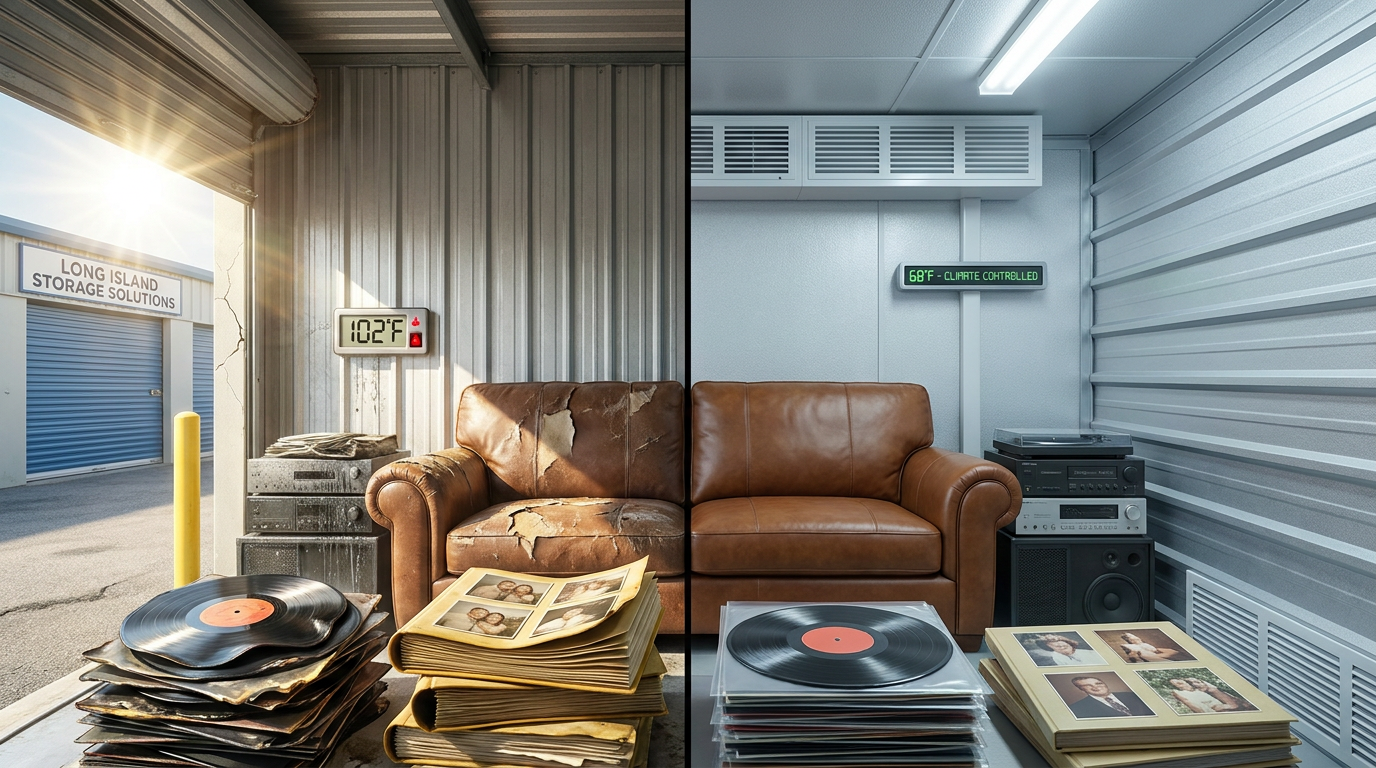
Temperature fluctuations represent the primary concern. According to ConsumerAffairs research on storage facilities, drive-up units experience the same temperature swings as outdoor conditions. In Suffolk County, summer temperatures can exceed 90 degrees Fahrenheit while winter lows drop below 20 degrees. These extremes can damage electronics, wooden furniture, vinyl records, photographs, and leather goods over extended storage periods.
Humidity exposure poses additional risks. Long Island's coastal climate brings humidity levels above 70 percent during summer months. Without climate control, this moisture can cause mold growth on fabric items, rust on metal tools, and warping in wooden furniture. Items stored longer than six months face increased risk.
Weather exposure during loading affects convenience. Rain, snow, and wind directly impact your experience when accessing drive-up units. Indoor facilities with covered loading areas protect both you and your belongings during inclement weather.
Security perception concerns some renters. While modern drive-up facilities like Moriches Storage feature gated access, security cameras, and LED lighting, some people prefer the additional barrier of interior hallways. Both configurations provide effective security when properly managed.
What Is the Cheapest Way to Get Storage?
Drive-up storage consistently offers the lowest cost per square foot among professional storage options. However, several strategies can reduce your expenses further.
Choose the right size. Overpaying for unused space wastes money every month. Use a storage unit size guide to match your belongings to the smallest adequate unit. A 5x10 unit at $185 per month costs $2,220 annually, while a 10x10 at $275 per month costs $3,300. Accurate sizing saves $1,080 per year in this example.
Avoid climate control when possible. Reserve climate-controlled units for genuinely sensitive items. Metal tools, plastic bins, outdoor furniture, sporting equipment, and most boxed household goods store safely in standard drive-up units. The 20 to 50 percent premium for climate control only makes sense for electronics, antiques, documents, and wooden furniture.
Select suburban locations. Urban storage facilities in areas like Manhattan or downtown Brooklyn charge $200 to $400 per month for 10x10 units. Suburban facilities in Suffolk County offer comparable units for $150 to $300. The 20-minute drive from Westhampton or Manorville to East Moriches can save $100 or more monthly.
Look for month-to-month flexibility. Facilities requiring long-term contracts may offer lower rates but lock you into payments even after you no longer need storage. Month-to-month rentals let you cancel when your needs change, potentially saving months of unnecessary payments.
What Is a Cheaper Alternative to a Storage Unit?
Before committing to any storage unit, consider whether alternatives might serve your needs at lower cost. Each option involves trade-offs between price, convenience, and security.
Garage or basement storage costs nothing beyond the space you already have. However, most homeowners underestimate how much usable space they possess. Reorganizing existing storage areas with shelving systems from Home Depot or Lowes (typically $50 to $200) can free significant capacity.
Portable storage containers from companies like PODS, 1-800-PACK-RAT, or U-Pack deliver units to your location. Prices range from $150 to $300 per month for an 8-foot container, comparable to small drive-up units. The convenience of loading at home appeals to some renters, though monthly costs often exceed traditional self-storage.
Shared storage arrangements split costs with family members or trusted friends. Two households sharing a 10x20 unit at $425 per month pay just $212.50 each for 100 square feet of space. This approach works well for seasonal items like holiday decorations or summer gear accessed infrequently.
Selling or donating items eliminates storage costs entirely. The average American household contains $3,100 worth of unused items according to OfferUp marketplace research. Selling these goods through Facebook Marketplace, Craigslist, or local consignment shops generates income rather than incurring monthly expenses.
How Much Does a 10x20 Storage Unit Cost?
A 10x20 storage unit provides 200 square feet of space, enough to store the contents of a three-bedroom home or multiple vehicles. According to Storage Star's 2026 pricing analysis, national rates for this size range from $150 to $450 per month depending on location and features.
At Moriches Storage, a 10x20 drive-up unit with interior lighting rents for $425 per month. This rate reflects Long Island market conditions and includes 24/7 access, security cameras, gated entry, and a fully paved facility.
Regional price variations for 10x20 units demonstrate significant differences:
| Location Type | Drive-Up 10x20 | Indoor Climate 10x20 |
|---|---|---|
| Rural Midwest | $120 to $180 | $160 to $250 |
| Suburban Northeast | $250 to $450 | $350 to $600 |
| Major Metro (NYC, SF, LA) | $400 to $700 | $500 to $900 |
| Long Island South Shore | $375 to $500 | $475 to $650 |
The 10x20 size works well for storing vehicles, large furniture sets, or business inventory. Contractors in the Mastic, Shirley, and Eastport areas frequently use this size for equipment and materials between job sites.
When Should You Choose Drive-Up Storage?
Drive-up storage delivers the best value when your storage needs align with its strengths. Specific situations make drive-up access the clear winner over indoor alternatives.
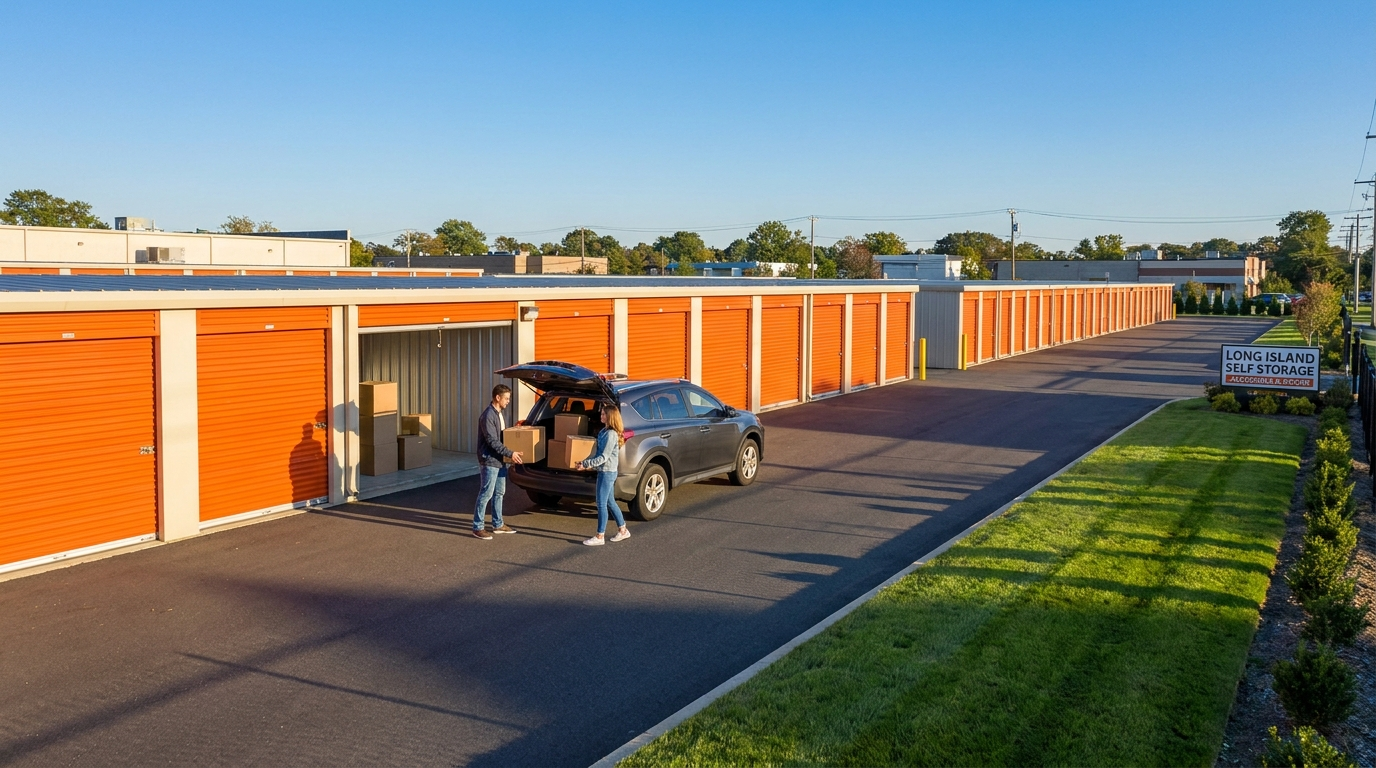
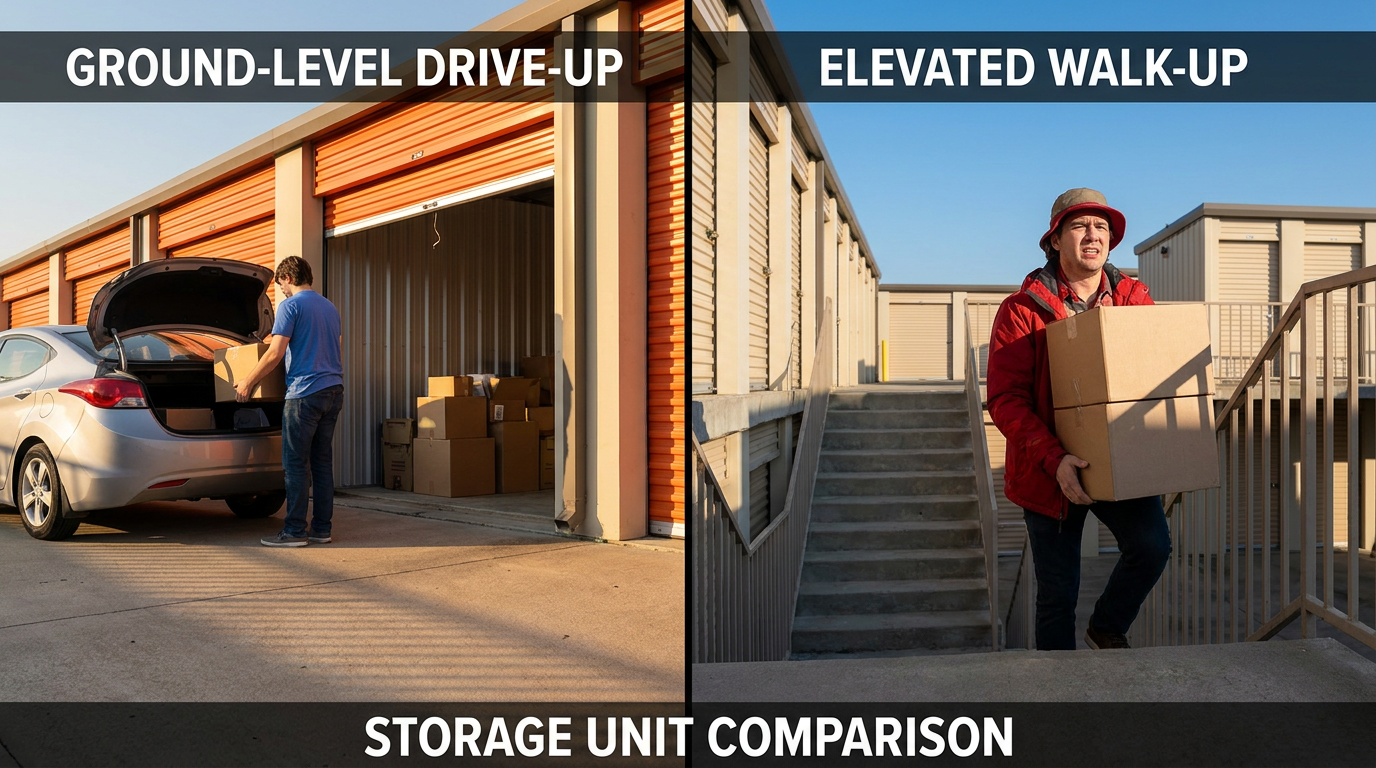
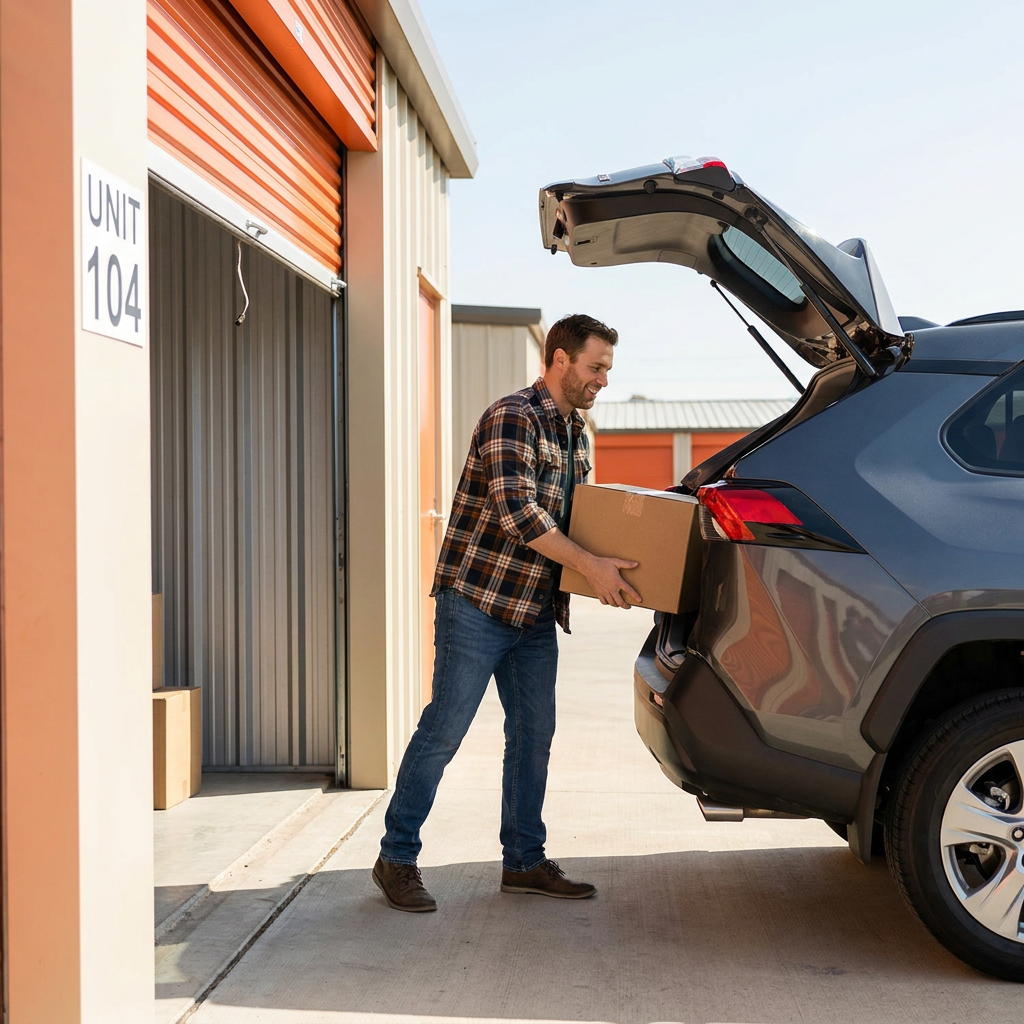
Frequent access requirements favor drive-up units. Contractors accessing tools daily, businesses rotating inventory weekly, or households retrieving seasonal items monthly benefit from parking directly at the unit door. Indoor facilities require walking through hallways and potentially waiting for elevators, adding 5 to 15 minutes per visit.
Heavy or bulky items load more easily into drive-up units. Furniture, appliances, exercise equipment, and boxed belongings transfer directly from truck to unit without navigating narrow corridors. The Self Storage Association reports that 67 percent of renters cite convenience as their primary selection factor.
Short-term storage needs under six months typically do not require climate control. Moving between homes, renovating a kitchen, or storing items during a temporary relocation rarely exposes belongings to enough temperature cycles to cause damage. The cost savings compound quickly over brief storage periods.
Durable item storage makes climate control unnecessary. Metal tools, plastic containers, lawn equipment, sporting goods, camping gear, and most garage items withstand temperature variations without degradation. Paying extra for climate control provides no benefit for these categories.
When Should You Choose Indoor Storage Instead?
Indoor storage, particularly climate-controlled units, justifies its higher cost for specific item categories and storage durations. Recognizing these situations prevents costly damage to valuable belongings.
Electronics and media require stable temperatures. Computers, televisions, audio equipment, vinyl records, and magnetic media suffer from temperature extremes. Circuit boards can crack, screens can delaminate, and data storage devices can fail. Climate-controlled storage maintains 55 to 80 degrees Fahrenheit year-round.
Wooden furniture and antiques expand and contract with temperature changes. Repeated cycling causes joints to loosen, veneer to separate, and finishes to crack. Heirloom pieces, antique furniture, and musical instruments like pianos and guitars need stable conditions.
Documents and photographs deteriorate in humid conditions. Paper yellows, photographs stick together, and ink can run when humidity exceeds 60 percent. Business records, family photos, and important documents benefit from climate control during long-term storage.
Leather and fabric items develop mold in humid environments. Leather furniture, clothing, and upholstered pieces can grow mildew within months in uncontrolled storage. The cost of professional cleaning or replacement typically exceeds the climate control premium.
Storage exceeding one year increases risk for all item categories. Even durable items experience more temperature cycles over extended periods. If you plan to store belongings for multiple years, evaluate whether the cumulative climate control cost remains less than potential replacement costs.
How to Calculate Your True Storage Cost
Monthly rent represents only part of your total storage expense. Understanding all costs helps you budget accurately and compare options effectively.
Administrative fees vary by facility. Some charge one-time setup fees of $20 to $50, while others require security deposits equal to one month's rent. Facilities like Moriches Storage eliminate deposits and offer fully online rental, reducing upfront costs.
Protection plan costs add $10 to $30 per month at most facilities. Tenant protection plans cover your belongings against fire, theft, and certain weather damage. Your homeowner's or renter's insurance may already provide coverage, so check your policy before purchasing additional protection.
Lock purchases typically cost $10 to $25 for disc locks or cylinder locks. Some facilities include locks in the rental, while others require you to provide your own. High-security locks from Master Lock or ABUS provide better protection than basic padlocks.
Moving supplies add up quickly. Boxes cost $2 to $5 each, packing tape runs $5 to $10 per roll, and furniture covers range from $10 to $30. Collecting free boxes from local retailers or using existing containers reduces this expense.
Transportation costs depend on your vehicle and distance. Renting a truck from U-Haul, Penske, or Budget costs $20 to $100 per trip depending on size and duration. Multiple trips multiply this expense, making proper size selection even more important.
Choosing Storage Near East Moriches and the South Shore
Location significantly impacts both cost and convenience for Long Island residents. Facilities along the South Shore serve communities from Westhampton to Mastic Beach, with pricing and features varying considerably.
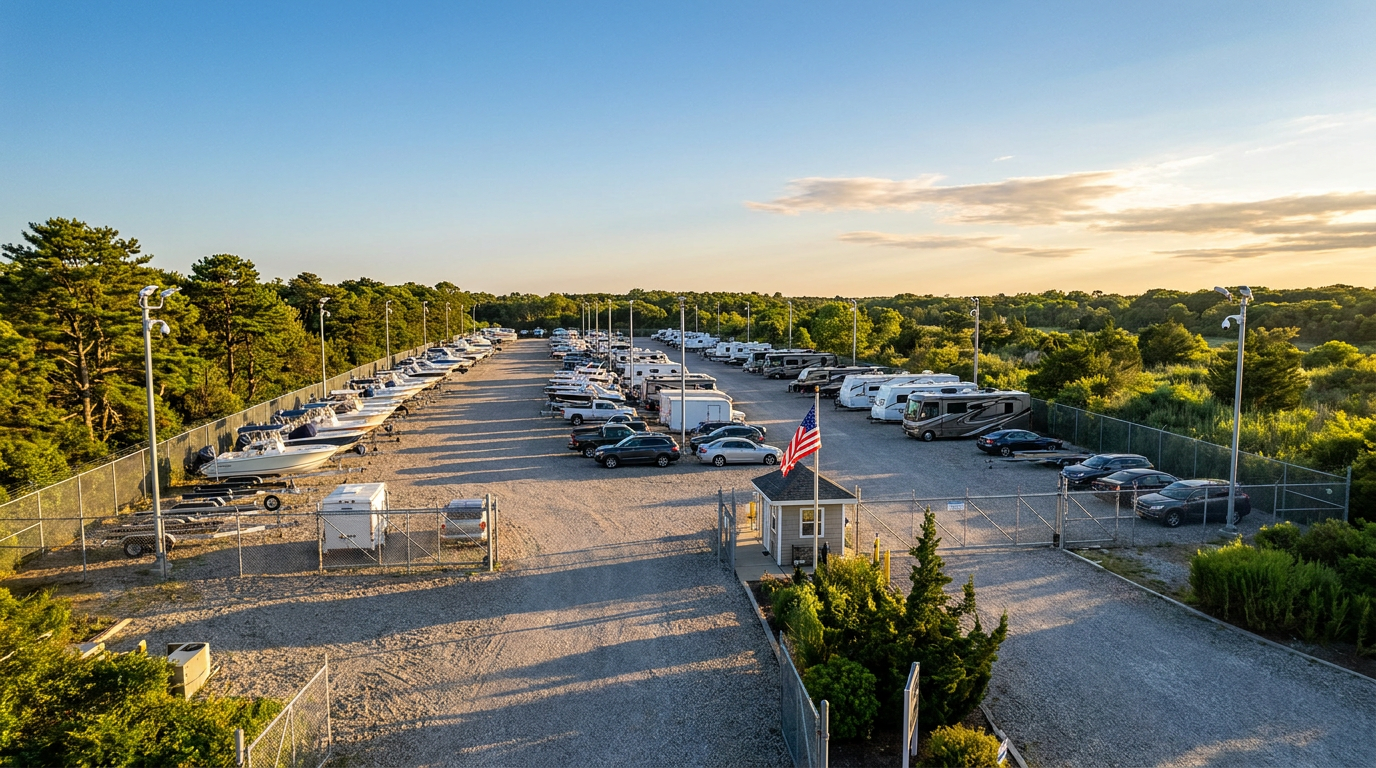
Moriches Storage sits at 192 Frowein Road in East Moriches, just off Sunrise Highway (NY-27) and Montauk Highway (NY-27A). This central location provides easy access for residents of Center Moriches, Eastport, Speonk, Remsenburg, Manorville, Shirley, and Brookhaven. The fully gated and paved facility features LED lighting, security cameras, and access control for 24/7 entry.
The facility offers all drive-up units with interior lighting, eliminating the need for flashlights during early morning or evening access. Month-to-month leases provide flexibility without long-term commitments, and the fully online rental process allows you to reserve and move in within 60 seconds.
Frequently Asked Questions
Are drive-up storage units safe for furniture and electronics?
Drive-up units safely store most furniture for periods under six months. Durable items like metal bed frames, plastic outdoor furniture, and laminate pieces tolerate temperature variations well. However, solid wood furniture, antiques, and electronics benefit from climate-controlled storage for longer durations. Wrapping items in moving blankets and using pallets to keep belongings off the floor provides additional protection.
Do I really need climate-controlled storage, or is a drive-up unit enough?
Climate control becomes necessary when storing temperature-sensitive items for extended periods or in extreme climates. For most household goods stored under one year on Long Island, drive-up storage provides adequate protection. Reserve climate control for electronics, wooden instruments, leather goods, important documents, and items with significant replacement value. The 20 to 50 percent cost savings from drive-up storage adds up to hundreds of dollars annually.
What factors affect the price of drive-up vs indoor storage in my area?
Five primary factors determine local storage pricing: real estate costs, facility age and amenities, local competition, unit size, and seasonal demand. Suffolk County's high property values push prices above national averages. Newer facilities with security features and paved lots command premium rates. Areas with multiple storage options see more competitive pricing. Larger units cost less per square foot. Summer months and month-end periods often see higher demand and reduced availability.
Are drive-up storage units more convenient for loading and unloading?
Drive-up units offer significantly faster loading and unloading compared to indoor facilities. You park your vehicle directly at the unit door, eliminating hallway navigation and elevator waits. This convenience matters most for heavy items, frequent access, and time-sensitive moves. Indoor facilities may require dollies or carts for long distances, adding 10 to 20 minutes per loading session.
How do I rent a storage unit without visiting an office?
Modern storage facilities offer fully online rental processes. At Moriches Storage, you can browse available units, select your size, complete payment, and receive access credentials within minutes. The online rental system eliminates office visits, paperwork delays, and scheduling constraints. You can move in immediately after completing your reservation, even outside traditional business hours.
|