How to Pack a Storage Unit Like a Pro: Maximize Space and Access |
| HOW TO PACK A STORAGE UNIT LIKE A PRO: MAXIMIZE SPACE AND ACCESS
⏱ 10 min read ·
📄 #1,960 words
Learn expert storage unit packing techniques that maximize space by 30-40%. Step-by-step strategies for organization, stacking, and easy access to your items.
|
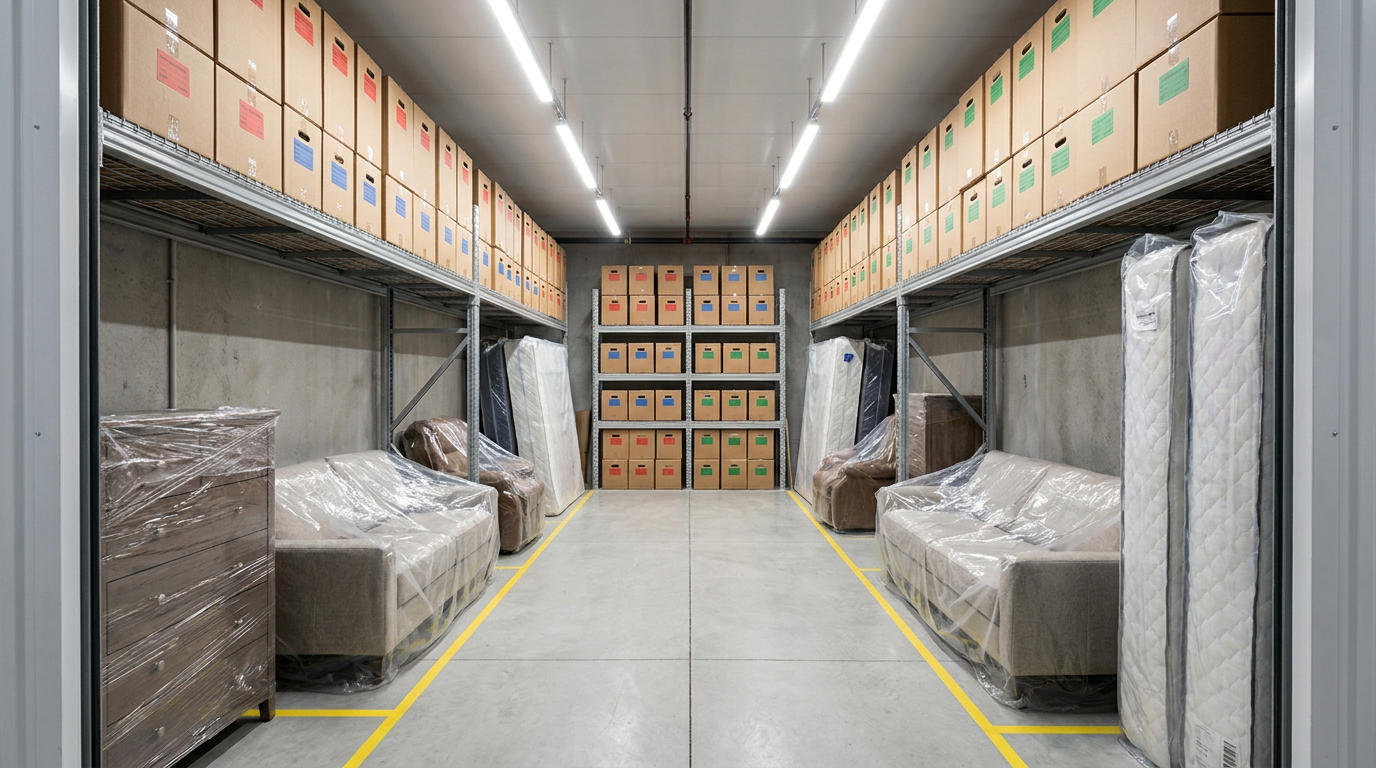
P rofessional storage unit packing follows a simple formula: heavy items on the bottom, vertical stacking to the ceiling, and a center aisle for access. Using uniform box sizes, strategic placement of frequently needed items near the door, and proper shelving can increase usable space by 30-40% compared to random loading.
| Key Points: | |
|---|---|
| • | Create a 2-foot center aisle from front to back for access to all items |
| • | Stack boxes in columns of uniform sizes, placing 50+ lb boxes on bottom only |
| • | Position items you need monthly within 3 feet of the unit door |
| • | Use vertical space with freestanding shelving units rated for 200+ lbs per shelf |
| • | Label all boxes on two sides with contents and room designation |
Calculate Your Space Requirements Before Packing
According to the Self Storage Association industry guidelines, most households underestimate their storage needs by 15-25%. A 10x10 unit holds approximately 450-500 cubic feet of belongings, equivalent to a one-bedroom apartment. A 10x20 unit accommodates a three-bedroom home's contents.
Measure large furniture pieces before selecting a unit. A standard sofa requires 7x3 feet of floor space when stored upright, while a queen mattress needs 5x7 feet when flat. Disassembling bed frames, tables, and shelving reduces space requirements by 20-30%.
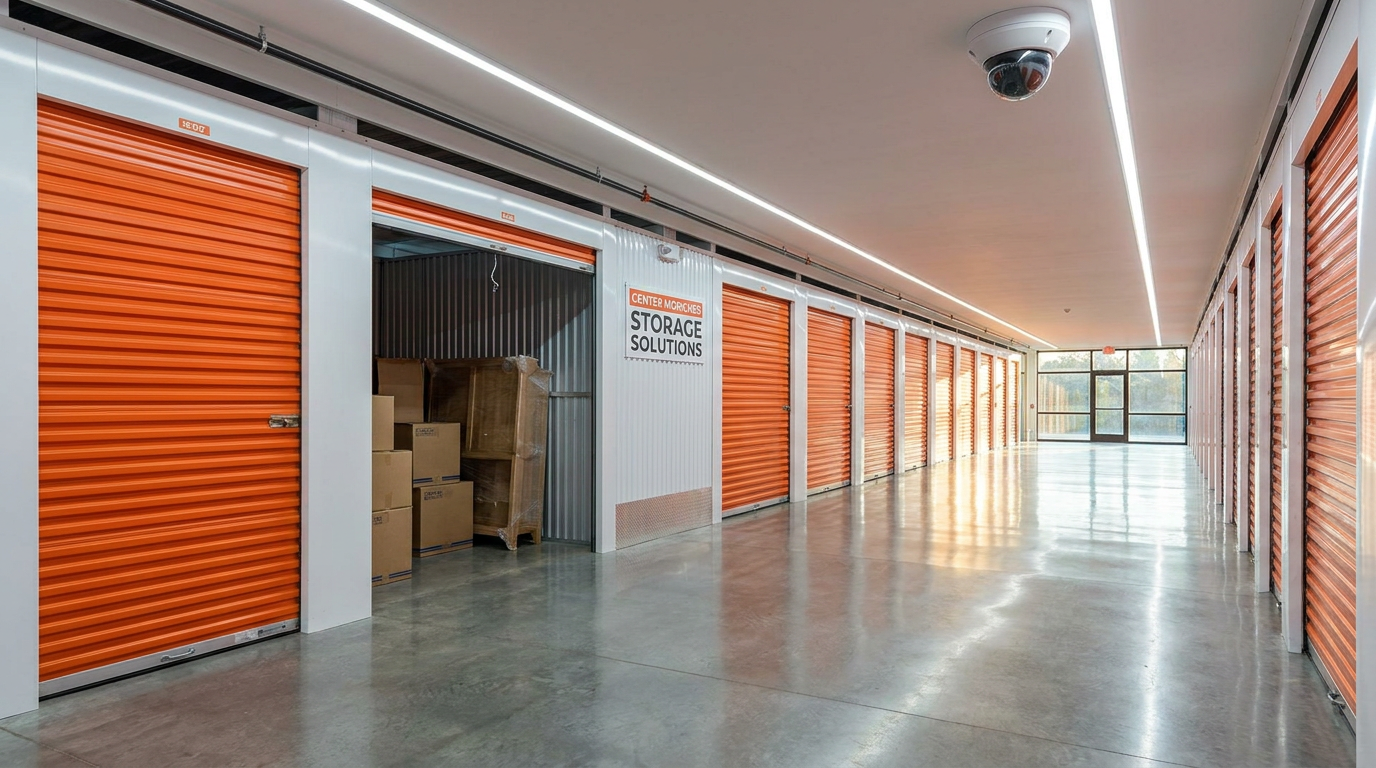
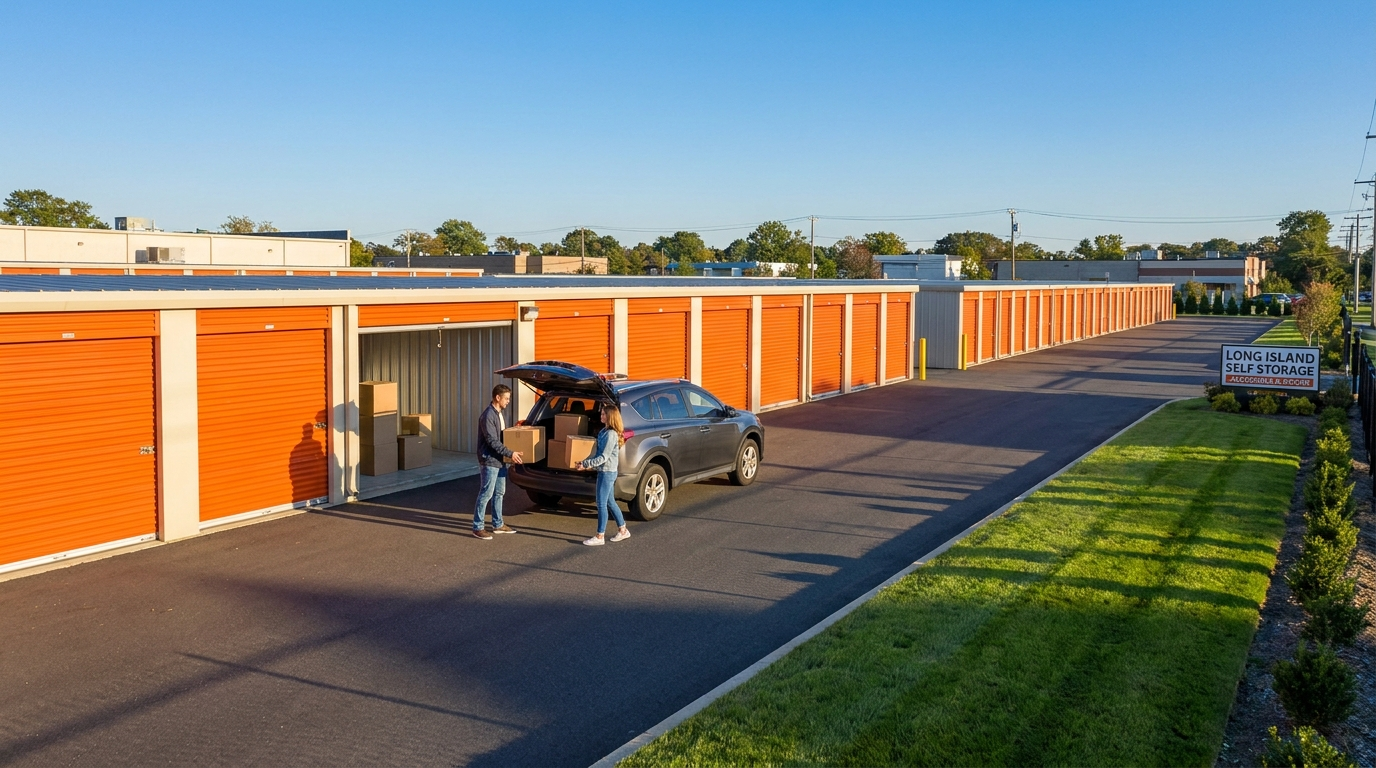
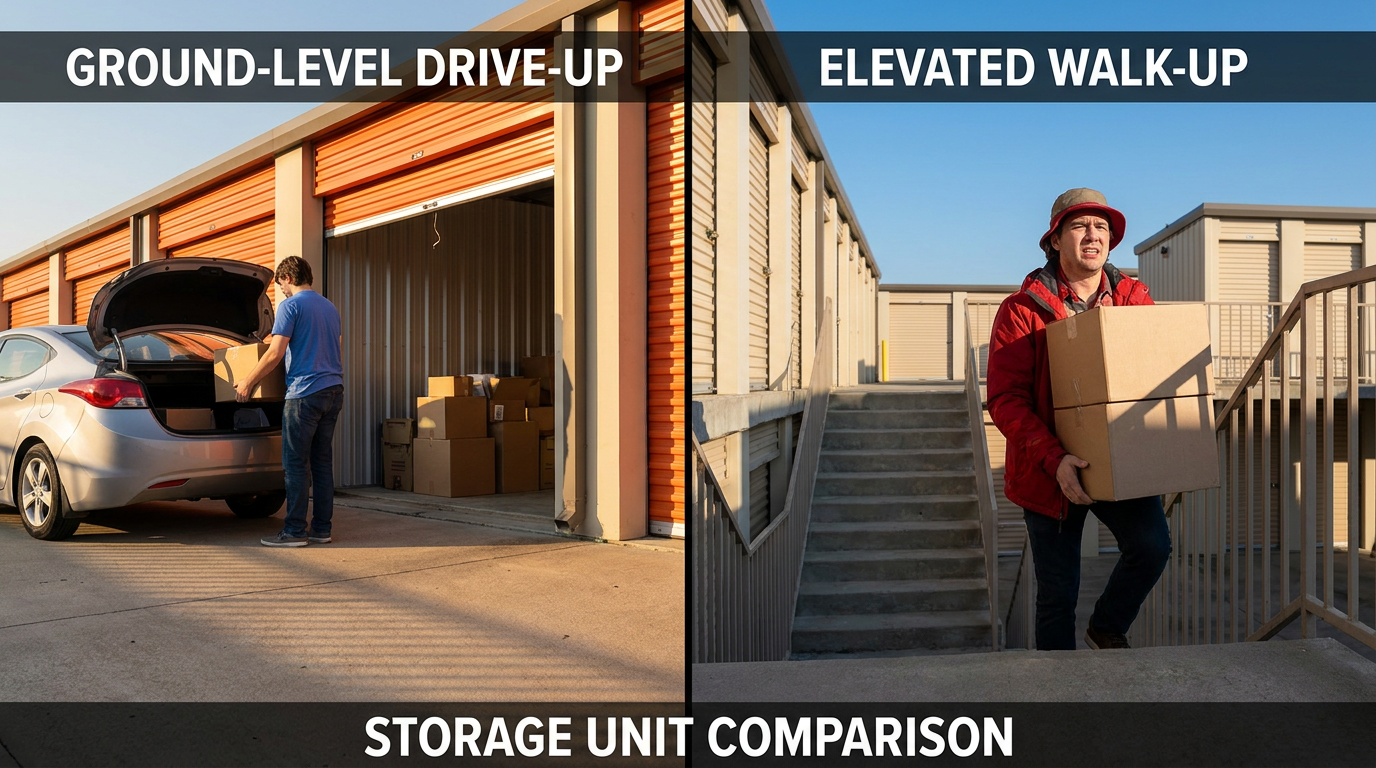
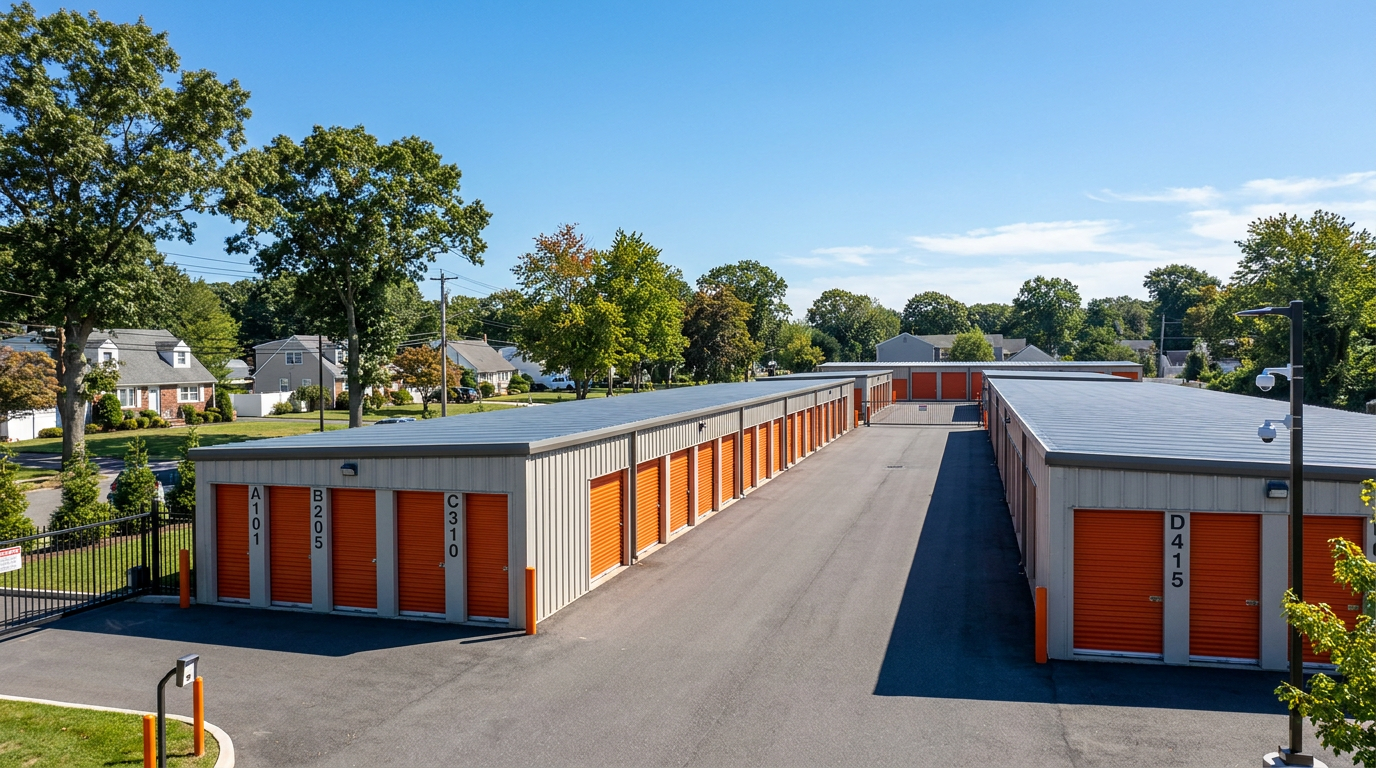
For drive-up units like those at Moriches Storage, factor in loading convenience. Units with direct vehicle access reduce moving time by 40-60% compared to interior units requiring dollies and elevators.
Essential Packing Supplies and Their Costs
Quality packing materials prevent damage and enable efficient stacking. Budget $75-150 for supplies when packing a 10x10 unit. The investment protects items worth thousands and maximizes vertical space utilization.
| Supply | Quantity (10x10 Unit) | Cost Range | Purpose |
|---|---|---|---|
| Medium boxes (18x18x16) | 20-30 | $25-45 | Uniform stacking, general items |
| Large boxes (18x18x24) | 10-15 | $20-35 | Lightweight bulky items |
| Wardrobe boxes | 3-5 | $30-50 | Hanging clothes protection |
| Packing tape (rolls) | 4-6 | $15-25 | Box sealing, reinforcement |
| Furniture covers | 5-8 | $15-30 | Dust and scratch protection |
| Mattress bags | 1-2 | $10-20 | Moisture and pest barrier |
Avoid newspaper for wrapping. Ink transfers to dishes, fabrics, and artwork. Use unprinted packing paper or bubble wrap for fragile items. Microfiber cloths work well for electronics and can be reused after unpacking.
The Zone System: Organizing for Access
Professional movers use a three-zone approach that balances space efficiency with accessibility. This method, recommended by organizations like the American Moving and Storage Association, reduces retrieval time by 50% compared to random placement.
Zone A (Front 3-4 feet): Items needed monthly or seasonally. Holiday decorations, seasonal clothing, sports equipment, and documents you might need to reference. Keep a clear path to these items without moving other boxes.
Zone B (Middle section): Items accessed 1-2 times per year. Furniture, kitchen items during renovation, baby gear between children, and archived household goods. Stack these efficiently but maintain aisle access.
Zone C (Back wall): Long-term storage items. Heirlooms, rarely used furniture, archived business records, and items held for future homes or family members. Maximize vertical stacking here since access frequency is low.
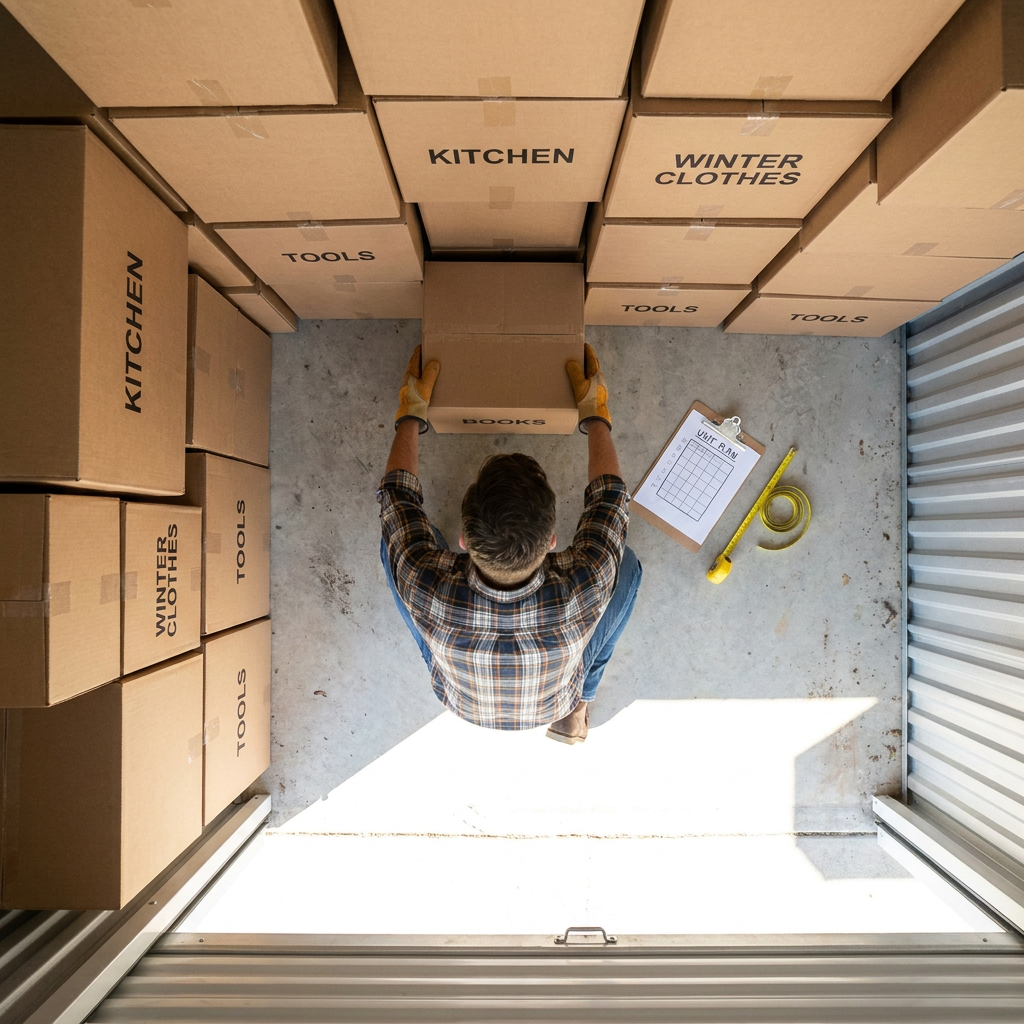
Strategic Loading Order: The 7-Step Method
Loading sequence determines both space efficiency and item protection. Follow this order for optimal results in any size unit from 5x5 to 10x30.
Step 1: Install shelving units first. Freestanding wire or plastic shelving rated for 200+ pounds per shelf transforms unusable vertical space into organized storage. Position shelving along side walls, leaving the center clear. A single 4-shelf unit adds 16-24 cubic feet of usable space for $40-80.
Step 2: Load mattresses and box springs. Stand these vertically against the back wall. Use mattress bags to prevent dust accumulation and moisture damage. Never lay mattresses flat with items stacked on top; this causes permanent indentations within 30-60 days.
Step 3: Position large furniture. Sofas can stand on end to save floor space. Dressers and desks go against walls with drawers facing outward for access. Remove table legs and store them inside drawers or tape them to the underside of tabletops.
Step 4: Create your base layer of heavy boxes. Books, tools, and dense items go on the floor. Never stack these boxes more than two high. Use uniform box sizes so columns remain stable.
Step 5: Build box columns to ceiling height. Place medium-weight boxes in the middle, lightweight boxes on top. Each column should contain boxes of the same size for stability. Leave 2-3 inches between box tops and the ceiling for air circulation.
Step 6: Fill gaps strategically. Rolled rugs fit behind furniture. Lamps and odd-shaped items fill spaces between box columns. Garbage bags of soft goods like pillows and linens compress into irregular spaces.
Step 7: Position Zone A items last. Frequently accessed items go near the door. Create a small staging area where you can set items while retrieving others from deeper in the unit.
Protecting Items in Non-Climate-Controlled Units
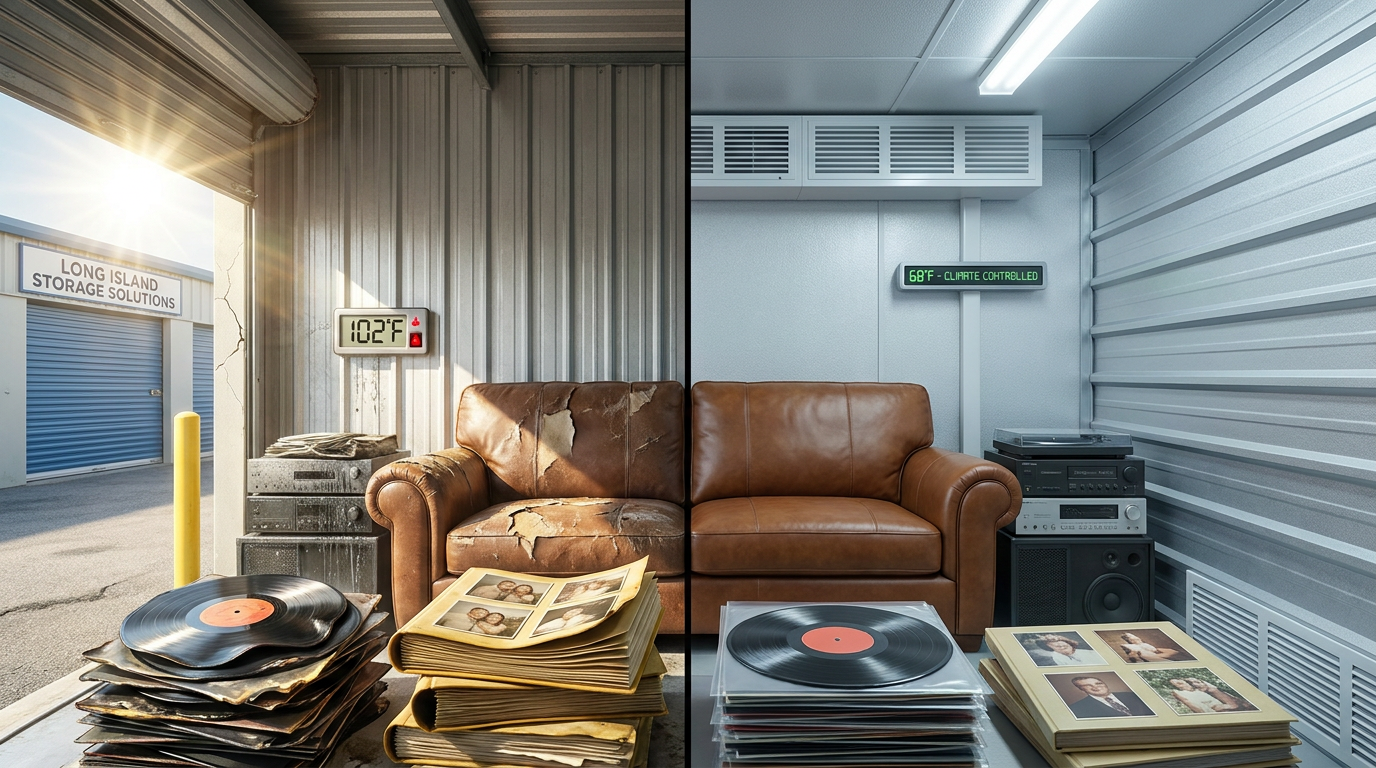
Drive-up storage units without climate control, common throughout Long Island and Suffolk County, experience temperature swings of 30-50 degrees between summer and winter. According to Extra Space Storage research, proper preparation prevents 90% of temperature-related damage.
Items requiring extra protection: Wood furniture expands and contracts with humidity changes. Apply furniture polish before storage and wrap pieces in breathable cotton covers, not plastic. Electronics need silica gel packets inside sealed containers to absorb moisture. Leather goods require conditioning before storage and breathable covers.
Items to avoid in non-climate units: Wine and other beverages, candles, vinyl records, photographs, and pharmaceutical products. These items degrade rapidly with temperature fluctuations. Consider keeping them in your home or renting a small climate-controlled unit specifically for sensitive items.
Pallets elevate items 3-4 inches off concrete floors, preventing moisture wicking. Wooden pallets cost $5-15 each at hardware stores or free from local businesses. Place pallets under furniture legs and box stacks, especially in units with exterior walls.
Labeling Systems That Actually Work
The average person visits their storage unit 4-6 times per year. Without proper labeling, each visit wastes 20-45 minutes searching for items. Implement a dual-system approach for maximum efficiency.
Physical labels: Write contents on two sides of each box using permanent marker. Include the room designation (kitchen, bedroom, garage) and a brief contents list. Color-coded tape by room speeds visual identification: blue for bedroom, green for kitchen, red for garage.
Digital inventory: Photograph each box's contents before sealing. Store images in a dedicated phone album or cloud folder named by box number. Apps like Sortly, Encircle, or a simple spreadsheet track locations within your unit. Update the inventory each time you add or remove items.
Create a master map showing box and furniture placement. Tape a copy inside the unit door and keep a digital version on your phone. This eliminates guesswork during retrieval visits.
Maximizing Vertical Space: Advanced Techniques
Most renters use only 60-70% of available cubic footage because they stop stacking at comfortable reaching height. Professional packers achieve 85-95% utilization with these methods.
Hollow furniture storage: Dressers, filing cabinets, and appliances contain usable interior space. Fill dresser drawers with linens, small items, or documents. Refrigerators and washing machines hold lightweight boxes. Secure doors with tape to prevent opening during stacking.
Overhead spaces: The area above sofas and large furniture often goes unused. Place lightweight boxes and soft goods in these spaces. Secure items with bungee cords to prevent shifting.
Dismantled furniture efficiency: A bed frame disassembled into components occupies 40% less space than when assembled. Remove legs from tables, take apart sectional sofas, and break down bookshelves. Bag all hardware and tape it to the corresponding furniture piece.
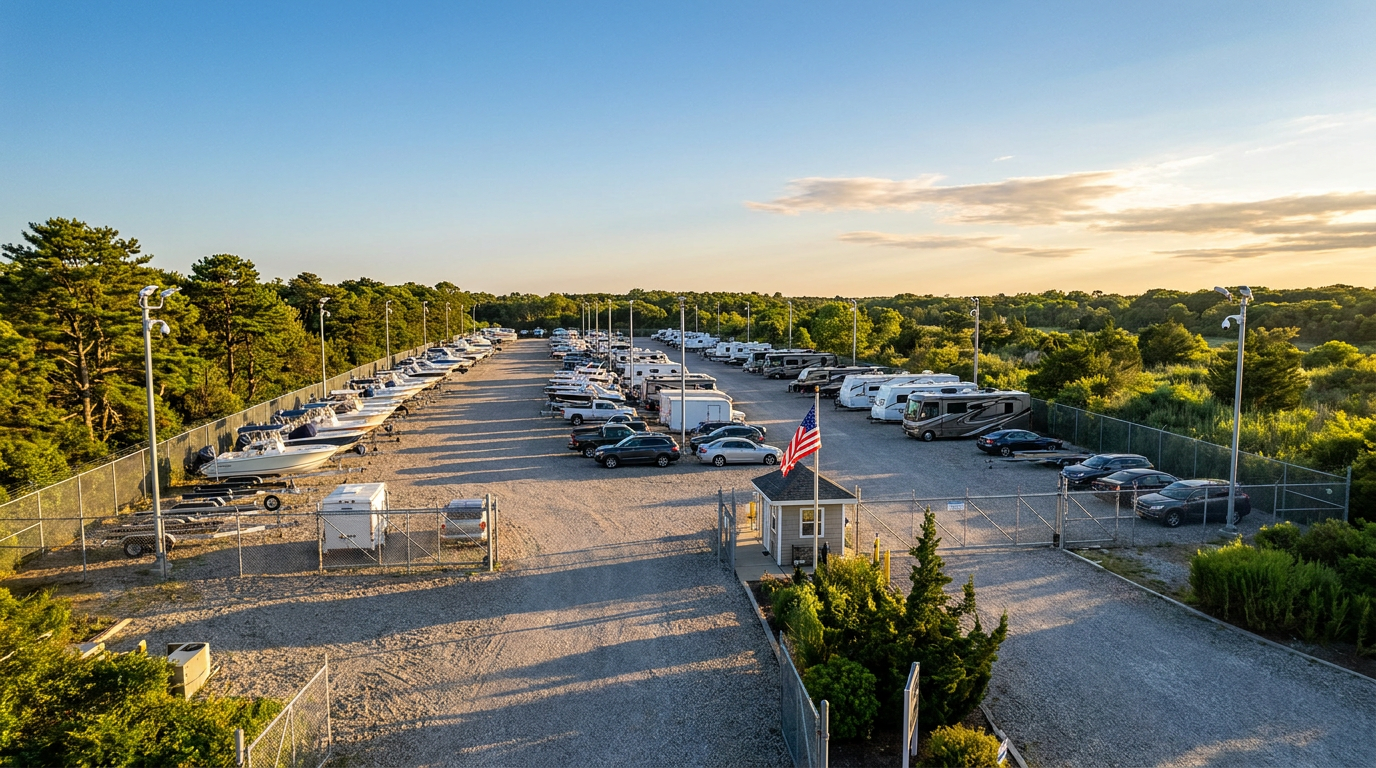
Facilities with 24/7 access, like the gated and well-lit property at Moriches Storage, allow you to reorganize during off-peak hours when you have time to optimize placement.
Common Packing Mistakes and Their Costs
Storage industry data shows that improper packing causes $500-2,000 in preventable damage annually for the average renter. Avoid these frequent errors.
| Mistake | Consequence | Solution |
|---|---|---|
| Overpacking boxes beyond 50 lbs | Box collapse, crushed contents | Use small boxes for heavy items |
| Storing items directly on concrete | Moisture damage, mold growth | Use pallets or plastic sheeting |
| Wrapping furniture in plastic | Trapped moisture, mildew | Use breathable cotton covers |
| No aisle for access | Hours wasted retrieving items | Maintain 2-foot center pathway |
| Mixing box sizes in columns | Unstable stacks, toppling | Stack same-size boxes only |
| Storing prohibited items | Lease violation, damage to unit | Review facility rules, remove hazards |
Consider a tenant protection plan for valuable items. Standard homeowner's insurance often excludes off-site storage, leaving you responsible for losses from theft, fire, or water damage.
Seasonal Access Planning for Long Island Residents
South Shore Long Island residents typically access storage units more frequently during May through September for beach gear, boats, and outdoor equipment. Plan your unit layout around these seasonal patterns.
Spring retrieval items: Patio furniture, grills, beach chairs, kayaks, and gardening equipment. Position these in Zone A during fall move-in so they are immediately accessible come spring.
Fall storage additions: Summer items return to storage as holiday decorations come forward. Rotate Zone A contents seasonally rather than reorganizing the entire unit.
For questions about access hours, payment options, or unit availability, the Moriches Storage FAQ page covers common topics, or you can contact the team directly seven days a week.
Security Considerations When Packing
How you pack affects security as much as facility features. According to Click Storage industry analysis, visible high-value items and poor lock choices account for most storage theft.
Concealment strategies: Never store items in original packaging that advertises contents. A TV box signals electronics inside. Repack valuable items in plain boxes with generic labels like "kitchen misc" or "books." Place valuable items in the back of the unit, behind furniture and common household goods.
Lock selection: Disc locks and shrouded shackle locks resist cutting better than standard padlocks. Expect to pay $15-40 for a quality lock. Combination locks eliminate key management; just store the combination in your phone contacts under a non-obvious name.
Facilities with security cameras, gated access, and LED lighting deter opportunistic theft. These features, standard at well-maintained properties throughout Suffolk County, provide documentation if incidents occur.
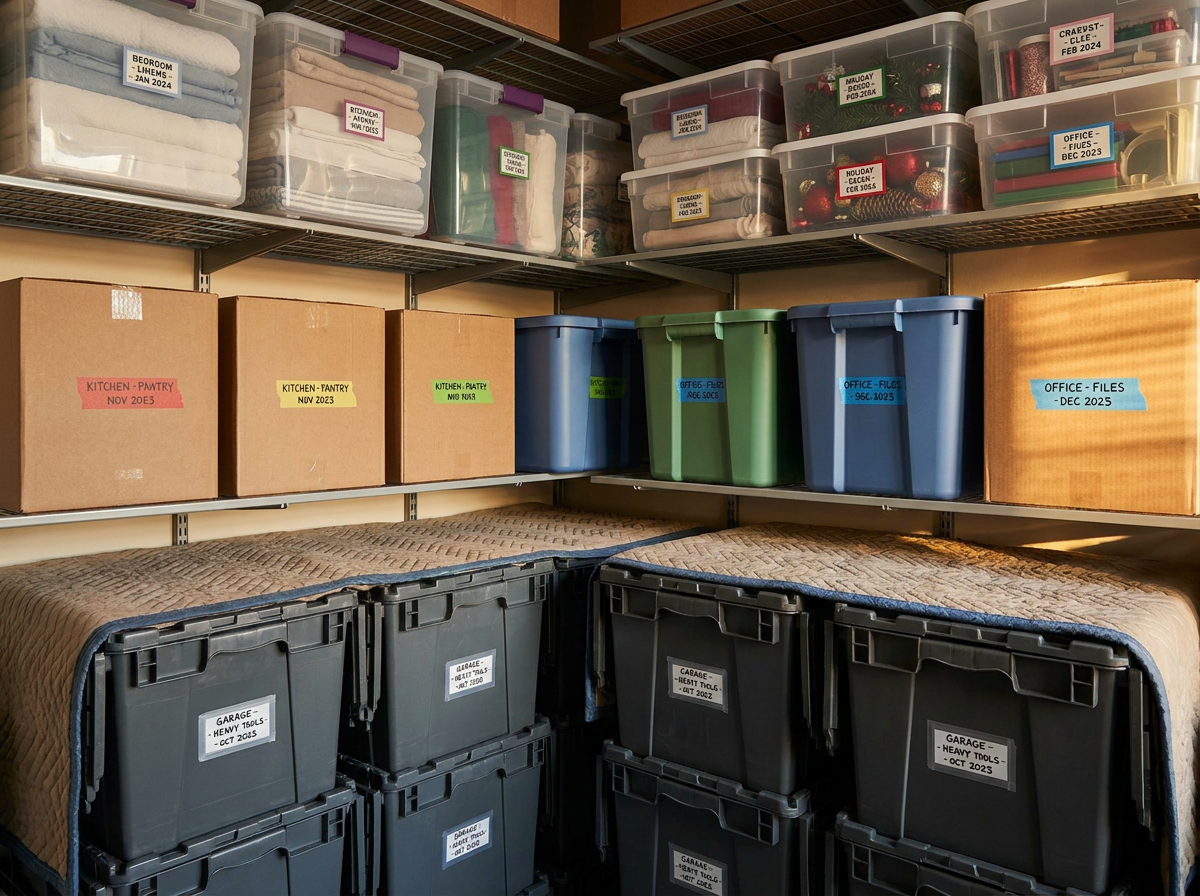
Creating Your Storage Unit Inventory Checklist
Before your move-in day, create a comprehensive list organized by the zone system. This checklist template covers most household storage scenarios.
Zone A checklist: Seasonal decorations with next holiday on top, current season clothing, frequently referenced documents, hobby equipment, and items for second homes or vacation properties.
Zone B checklist: Furniture being held during renovation, kitchen items during remodel, nursery furniture between children, archived tax records (keep 7 years per IRS guidelines), and sporting goods used 1-2 times annually.
Zone C checklist: Heirloom furniture, archived family photos and memorabilia, college items for children, estate items awaiting distribution, and business inventory or equipment in long-term storage.
Update your checklist each visit. Note items removed and their new location. This prevents the frustrating experience of searching your unit for items already retrieved months earlier.
Month-to-Month Flexibility for Changing Needs
Storage needs change as life circumstances evolve. Home renovations, relocations, business inventory fluctuations, and family changes all affect space requirements. Facilities offering month-to-month leases without long-term commitments allow you to upsize or downsize as needed.
Start with a slightly larger unit than your minimum estimate. The cost difference between a 5x10 and 5x15 unit is typically $30-50 per month, but the extra space prevents the frustration of a unit packed so tightly that access becomes impossible.
Review your storage needs quarterly. Items sitting untouched for 12+ months may be candidates for donation, sale, or disposal. The monthly rental cost often exceeds the replacement value of items stored long-term.
|