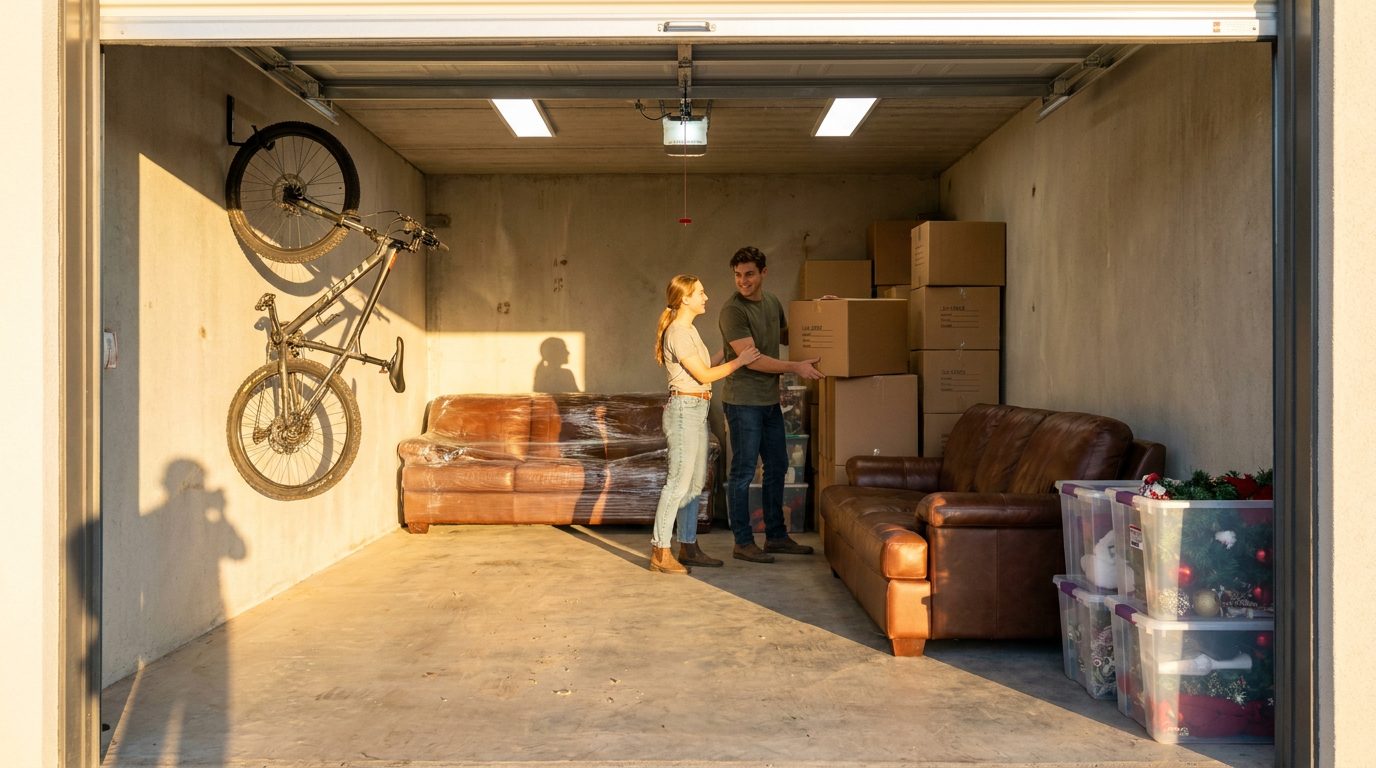
T he right storage unit size depends on three factors: the volume of your belongings, how often you need access, and whether you want room to add items later. A 5x5 unit holds about 20 boxes and small furniture, while a 10x20 unit fits a three to four bedroom home. Most renters overestimate by one size, so measuring your items first saves $30 to $200 per month.
| Key Points: | |
|---|---|
| • | 5x5 units (25 sq ft) work for seasonal items, boxes, and small furniture at $100 to $150 per month |
| • | 5x10 units (50 sq ft) hold one bedroom of furniture and 30 to 40 boxes at $150 to $200 per month |
| • | 10x10 units (100 sq ft) fit a one to two bedroom apartment at $200 to $300 per month |
| • | Measure your largest item first, as sofas and mattresses determine minimum width requirements |
| • | Add 20% extra space if you plan to access items frequently or add belongings over time |
Understanding Storage Unit Dimensions and Capacity
Storage units are measured in feet, with the first number representing width and the second representing depth. A 5x10 unit measures 5 feet wide by 10 feet deep, providing 50 square feet of floor space. According to the Self Storage Association, the average ceiling height is 8 feet, giving a 5x10 unit approximately 400 cubic feet of total capacity.
Square footage alone does not tell the full story. A 4x20 unit and an 8x10 unit both offer 80 square feet, but they suit different items. The narrow 4x20 works well for long items like lumber, kayaks, or seasonal equipment. The wider 8x10 accommodates bulky furniture and appliances that need turning room during loading.
Ceiling height matters for stacking. Most drive-up units have 8 to 9 foot ceilings, allowing you to stack boxes and lightweight items vertically. Heavy items should stay on the floor, while lighter boxes can go on top of furniture. This vertical strategy lets a 5x10 unit hold significantly more than its floor space suggests.
Storage Unit Size Comparison Chart
The following table compares common storage unit sizes available at facilities across Suffolk County and Long Island. Prices reflect typical ranges for non-climate-controlled drive-up units in the East Moriches area as of 2026.
| Unit Size | Square Feet | Room Equivalent | Typical Monthly Cost |
|---|---|---|---|
| 5x5 | 25 sq ft | Large closet | $100 to $150 |
| 5x10 | 50 sq ft | One bedroom | $150 to $200 |
| 5x15 | 75 sq ft | Large bedroom plus extras | $180 to $250 |
| 10x10 | 100 sq ft | One to two bedroom apartment | $200 to $300 |
| 10x15 | 150 sq ft | Two to three bedroom home | $275 to $375 |
| 10x20 | 200 sq ft | Three to four bedroom home | $350 to $450 |
| 10x30 | 300 sq ft | Large home or vehicle storage | $500 to $650 |
These room equivalents assume efficient packing with furniture disassembled where possible. If you plan to store items loosely or need a center aisle for frequent access, increase your size estimate by 25 to 50 percent.
Small Storage Units: 5x5 and 5x10 Explained
Small storage units suit renters, students, seasonal residents, and anyone storing a limited number of items. The Self Storage Association reports that 5x10 units are the most commonly rented size nationwide, accounting for approximately 22 percent of all rentals. These compact options provide significant value when matched correctly to your needs.
5x5 Storage Unit: The Walk-In Closet
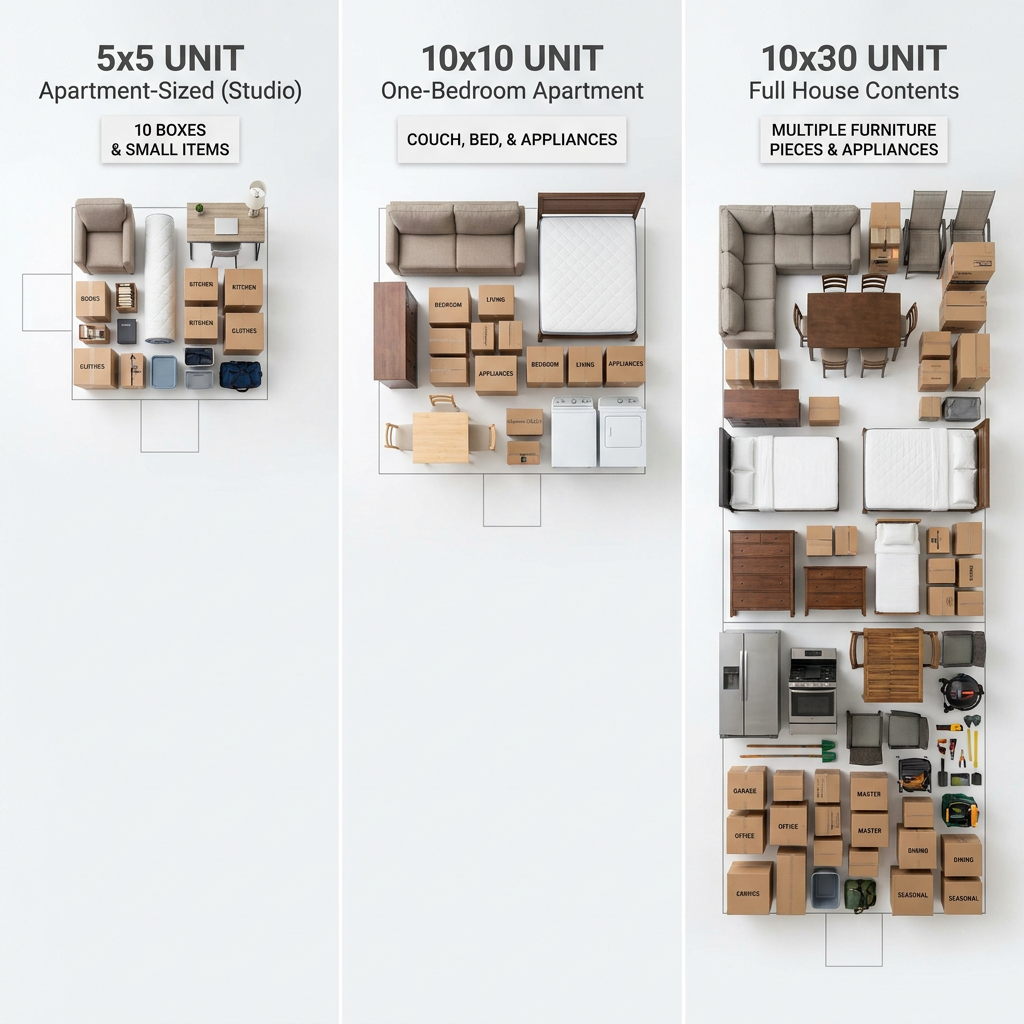
A 5x5 unit provides 25 square feet of floor space, roughly equivalent to a large walk-in closet. With standard 8-foot ceilings, you get 200 cubic feet of storage capacity. This size works well for seasonal items, holiday decorations, sporting equipment, and small furniture pieces.
Typical contents for a 5x5 unit include 15 to 20 medium moving boxes, a small dresser or chest, seasonal clothing in bins, holiday decorations, and sports equipment like golf clubs or skis. At Moriches Storage, a 5x5 drive-up unit with lights rents for $135 per month with no deposit required.
This size does not accommodate standard sofas, mattresses larger than twin size, or full bedroom sets. If your inventory includes any of these items, step up to a 5x10.
5x10 Storage Unit: One Room of Furniture
A 5x10 unit doubles your floor space to 50 square feet, providing approximately 400 cubic feet of storage with standard ceiling height. This popular size fits the contents of a single bedroom, a studio apartment (when packed efficiently), or a significant collection of boxes and household items.
Typical contents include a queen or full mattress set, a dresser, a small desk, a nightstand, 30 to 40 boxes, and miscellaneous items like lamps and mirrors. The 10-foot depth allows you to create a narrow walkway to access items stored at the back.
For Long Island residents downsizing, renovating, or between moves, the 5x10 offers the best balance of capacity and cost. Moriches Storage offers 5x10 drive-up units at $185 per month, making it approximately $3.70 per square foot, a competitive rate for Suffolk County.
Medium Storage Units: 5x15 to 10x10
Medium storage units bridge the gap between closet-sized spaces and full-home storage. These sizes suit small families, home renovation projects, and small business inventory storage. According to industry data from U-Haul's storage research, medium units have the highest customer satisfaction rates because they provide adequate space without excessive cost.
5x15 Storage Unit: The Extended Bedroom
At 75 square feet, a 5x15 unit holds approximately one and a half bedrooms of furniture. The 15-foot depth accommodates longer items like sofas, bed frames, and tall bookshelves laid horizontally. This configuration works particularly well for storing a complete bedroom set plus additional living room furniture.
Typical contents include a queen bedroom set, a sofa or loveseat, a coffee table, an entertainment center, 40 to 50 boxes, and outdoor furniture like patio chairs. The narrow width requires strategic loading, with larger items placed first and boxes filling gaps.
10x10 Storage Unit: The Two-Car Garage Alternative
A 10x10 unit provides 100 square feet, equivalent to half of a standard one-car garage. This size comfortably holds the contents of a one to two bedroom apartment, including living room furniture, a full bedroom set, kitchen items, and 50 to 75 boxes.
The 10-foot width makes a significant difference for bulky items. You can fit a standard sofa (typically 7 to 8 feet long) against the back wall with room to maneuver. Appliances like refrigerators and washing machines fit easily, making this size popular during home renovations.
At $275 per month for a 10x10 drive-up unit at Moriches Storage, the cost per square foot drops to $2.75, representing better value than smaller units for renters with moderate storage needs.
Large Storage Units: 10x15 to 10x30
Large storage units serve whole-home storage, vehicle storage, and commercial inventory needs. These sizes provide the space equivalent of a small garage or workshop, with enough room for furniture, appliances, vehicles, and business equipment.
10x15 Storage Unit: The Two to Three Bedroom Home
At 150 square feet, a 10x15 unit holds the contents of a two to three bedroom home when packed efficiently. This size works well for families relocating, homeowners undergoing major renovations, and estate storage situations.
Typical contents include multiple bedroom sets, living room furniture, dining room table and chairs, major appliances, 75 to 100 boxes, and outdoor equipment. The additional depth compared to a 10x10 provides critical space for items that do not stack well.
10x20 Storage Unit: The Full Home or Vehicle
A 10x20 unit provides 200 square feet, equivalent to a standard one-car garage. This versatile size accommodates the contents of a three to four bedroom home or a single vehicle up to mid-size SUV dimensions. Many renters use this size during extended relocations or when storing a vehicle plus household items together.
For vehicle storage, the 10x20 fits most sedans, small SUVs, and motorcycles with room for additional boxes along the walls. Boats up to 18 feet and small trailers also fit within these dimensions. At Moriches Storage, 10x20 drive-up units rent for $425 per month.
10x25 and 10x30 Storage Units: Commercial and Vehicle Storage
The largest standard units at 250 to 300 square feet serve commercial inventory storage, contractor equipment, and larger vehicle storage. A 10x30 unit fits boats up to 25 feet, large RVs, and commercial vehicles alongside equipment and supplies.
Small businesses use these sizes for inventory overflow, seasonal merchandise, and equipment storage. Contractors store tools, materials, and work vehicles in a single secure location. At $595 per month for a 10x30 unit, the cost per square foot drops to approximately $1.98, the most economical rate for high-volume storage needs.
How to Calculate Your Storage Needs
Accurate size estimation prevents paying for unused space or cramming belongings into an undersized unit. Follow this systematic approach to determine your ideal unit size with precision.
Step 1: Inventory Your Items
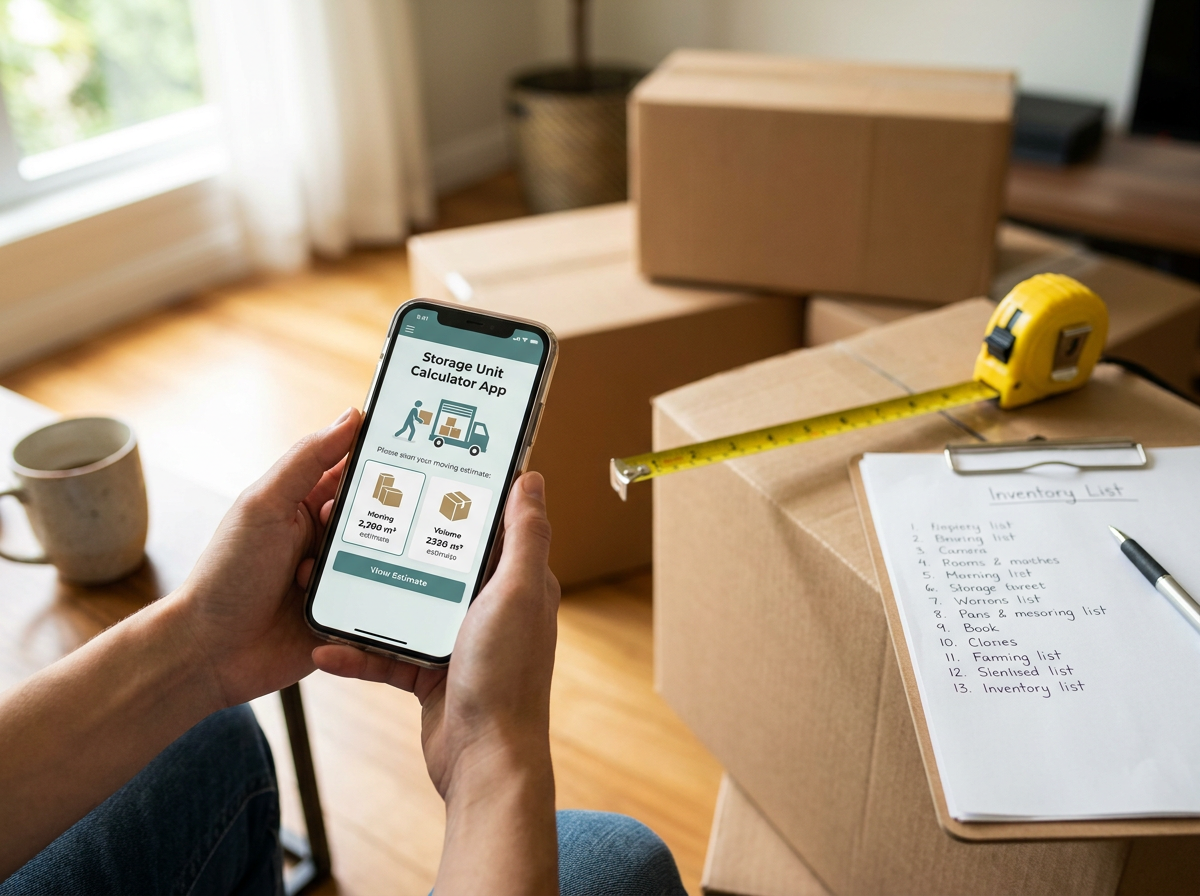
Create a complete list of everything you plan to store. Group items by category: furniture, appliances, boxes, outdoor equipment, and specialty items. Note the dimensions of your largest pieces, as these determine minimum width and depth requirements.
Standard furniture dimensions to reference: queen mattress (60 x 80 inches), standard sofa (84 x 36 inches), refrigerator (36 x 30 x 70 inches), washer or dryer (27 x 27 x 38 inches). Measure any custom or oversized pieces directly.
Step 2: Estimate Box Count
Most households generate more boxes than expected during a move or storage project. A typical bedroom produces 10 to 15 medium boxes. A kitchen generates 8 to 12 boxes. Living rooms and home offices each produce 5 to 10 boxes. Add 20 percent to your initial estimate for items you will remember later.
Standard medium moving boxes measure 18 x 18 x 16 inches and hold approximately 3 cubic feet. A 5x10 unit stacked efficiently holds 80 to 100 medium boxes without furniture, or 30 to 40 boxes alongside a bedroom set.
Step 3: Apply the Room Formula
Use this simplified calculation: multiply the number of furnished rooms by 50 square feet for a baseline estimate. A furnished two-bedroom apartment (bedroom, bedroom, living room, kitchen) equals 4 rooms times 50, suggesting a 200 square foot unit or 10x20.
Adjust this baseline based on furniture density. Minimally furnished rooms reduce the estimate by 25 percent. Heavily furnished rooms with large pieces increase it by 25 percent. Add 10 square feet for each major appliance.
Step 4: Add Access Space
If you need regular access to items, add 20 to 30 percent to your calculated size. This buffer allows for a center aisle or front staging area where you can unpack and repack without removing everything. Long-term storage with infrequent access can pack more tightly.
For help visualizing your needs, visit the Moriches Storage size guide which provides detailed breakdowns of what fits in each unit size.
Special Considerations for Long Island Residents
Storage needs on Long Island's South Shore differ from national averages due to regional factors including seasonal living patterns, boat ownership, and home renovation frequency. Understanding these local considerations helps you choose the right size.
Seasonal and Second-Home Storage
Many Westhampton, Remsenburg, and Hamptons residents maintain seasonal homes requiring off-season storage. Patio furniture, outdoor grills, pool equipment, and seasonal decorations typically require a 5x10 to 5x15 unit. Beach equipment, kayaks, and paddleboards add another 25 to 50 square feet.
Second-home owners often store duplicate household items, linens, and seasonal clothing. A 5x5 unit handles clothing and linens, while a 5x10 accommodates these items plus small furniture and household goods.
Boat and Vehicle Storage
Suffolk County's proximity to the Great South Bay and Atlantic Ocean means many residents own boats requiring winter storage. Boat storage requirements depend on vessel length and whether you store on a trailer.
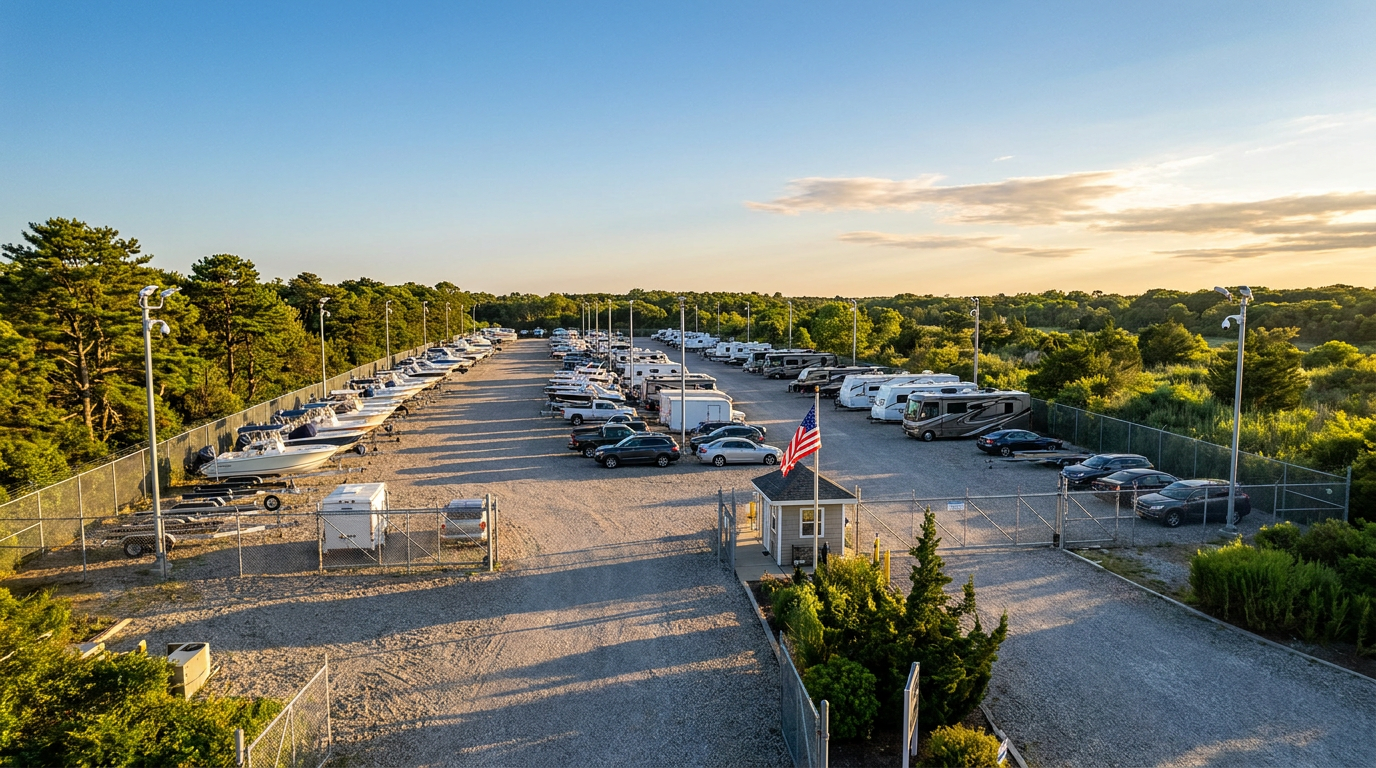
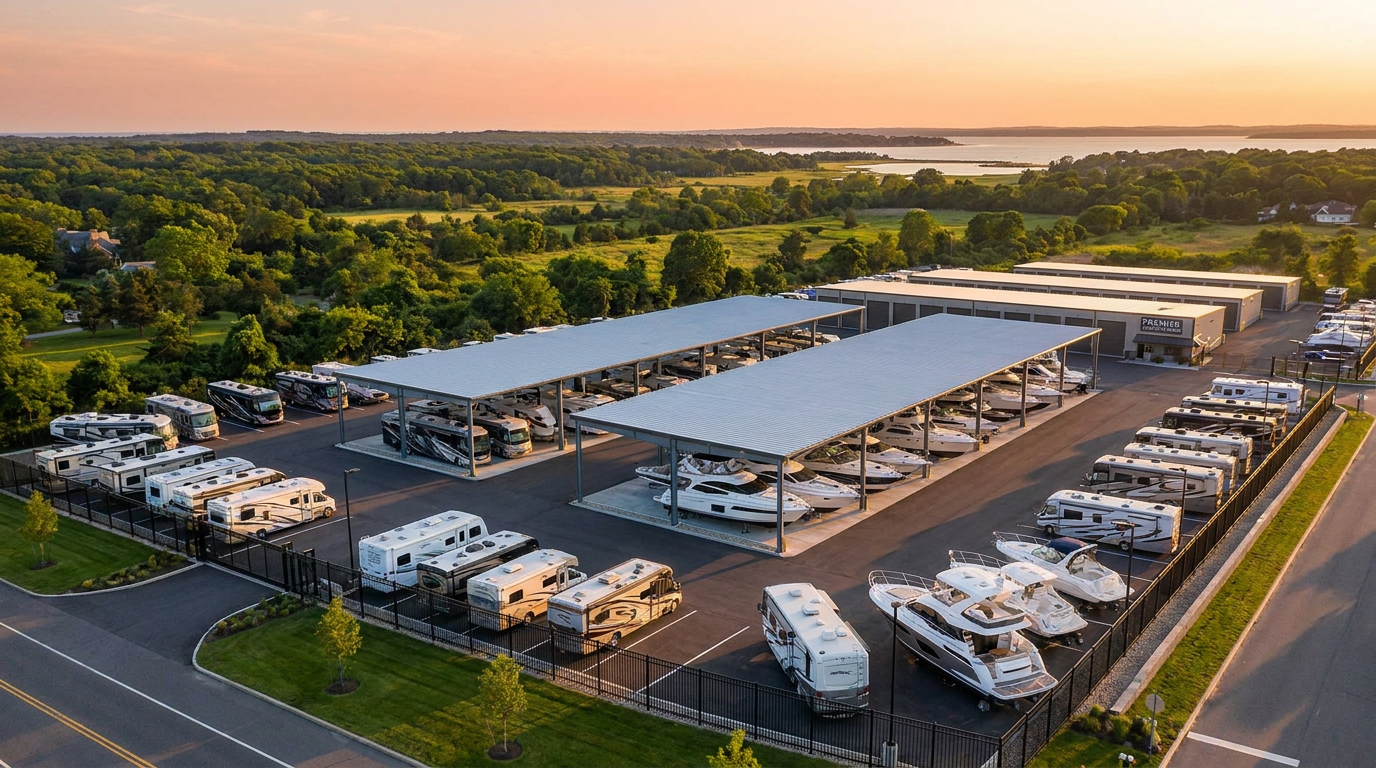
Boats under 18 feet fit in a 10x20 enclosed unit. Boats 18 to 25 feet require a 10x30 unit or open parking space. Moriches Storage offers 12x20 and 12x30 open parking spaces at $155 and $175 per month respectively, providing economical options for boats, RVs, and trailers.
Home Renovation Storage
Long Island's aging housing stock means many homeowners undertake renovations requiring temporary furniture storage. Kitchen renovations typically require a 5x10 to 10x10 unit for appliances, cabinets, and dining furniture. Whole-home renovations need 10x15 to 10x20 units depending on home size.
Renovation projects benefit from drive-up access, allowing easy loading and unloading of heavy items. All units at Moriches Storage feature drive-up access with in-unit lighting, making after-hours loading convenient during busy renovation schedules.
Common Sizing Mistakes to Avoid
Industry data from Extra Space Storage indicates that 35 percent of first-time renters choose the wrong size, with most selecting units too large for their needs. Avoid these common errors to optimize your storage investment.
Mistake 1: Ignoring Vertical Space
Floor space alone does not determine capacity. A 5x10 unit with 8-foot ceilings holds significantly more than its 50 square feet suggests when you stack boxes on furniture and use shelving. Invest in sturdy shelving units to maximize vertical storage and potentially downsize to a smaller unit.
Mistake 2: Forgetting Disassembly
Bed frames, tables, and modular furniture take less space when disassembled. A queen bed frame assembled occupies approximately 35 square feet of floor space. Disassembled and stored vertically, it uses less than 10 square feet. Factor disassembly into your size calculations.
Mistake 3: Overestimating for Safety
While buffer space helps, renting a 10x20 when a 10x10 suffices wastes $150 or more monthly. Use precise measurements rather than rough guesses. When uncertain, start with the smaller size; most facilities allow upgrades if needed.
Mistake 4: Neglecting Access Patterns
If you need weekly access to specific items, pack those items near the front and maintain a clear path. This access requirement might justify a slightly larger unit. Conversely, if you will not access items for months, pack tightly and save on size.
Choosing Between Unit Features
Beyond size, storage units vary in features that affect both price and suitability for your belongings. Understanding these options helps you make an informed decision.
Drive-Up vs. Interior Access
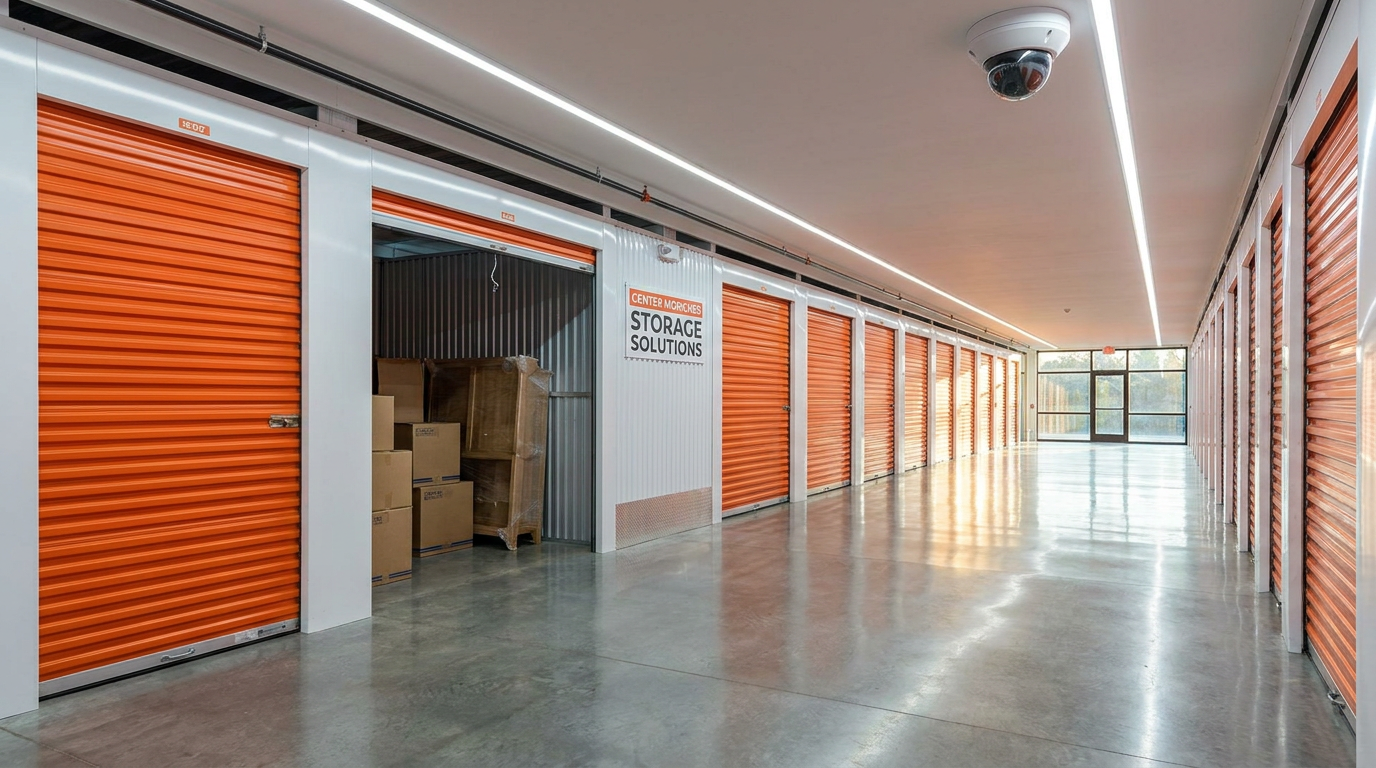
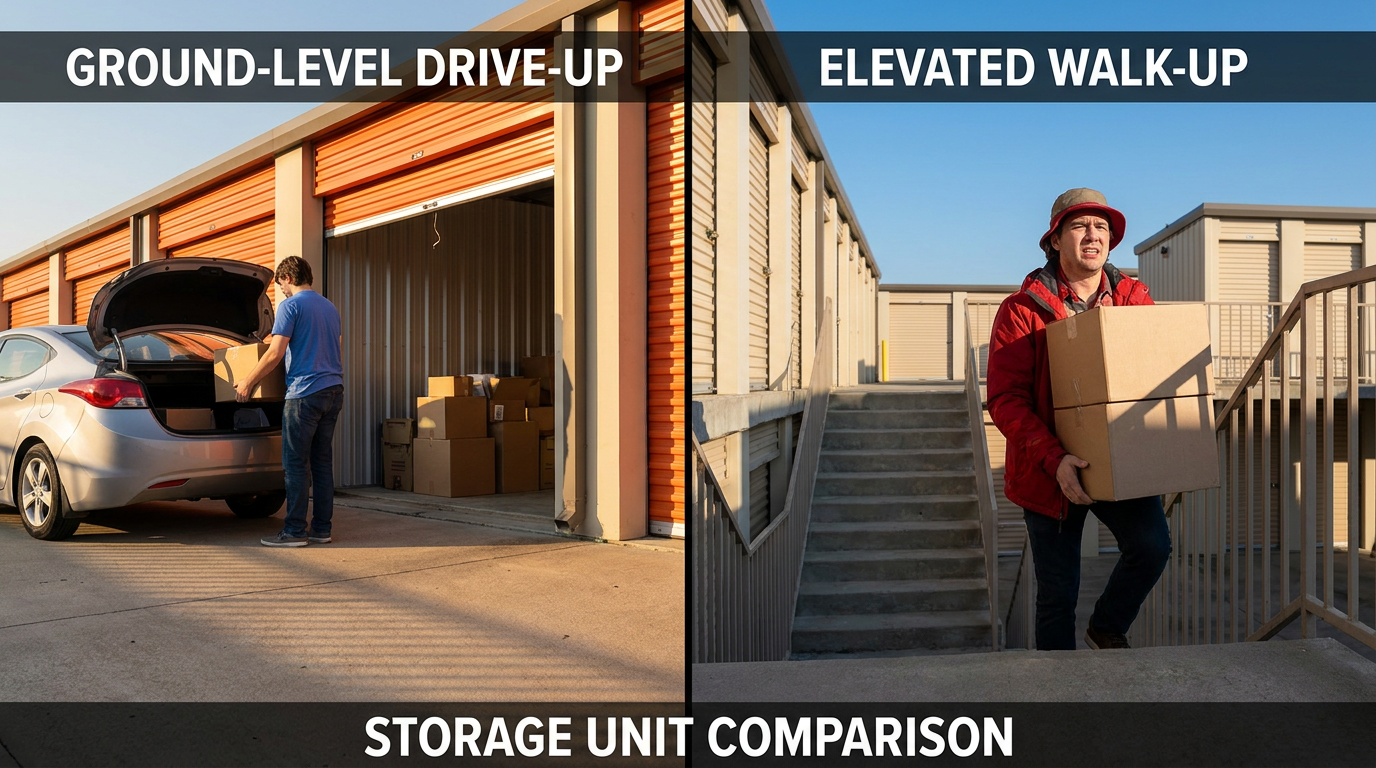
Drive-up units allow you to park directly in front of your unit door, simplifying loading of heavy furniture and appliances. Interior units located inside a building require carrying items through hallways and elevators but offer additional weather protection.
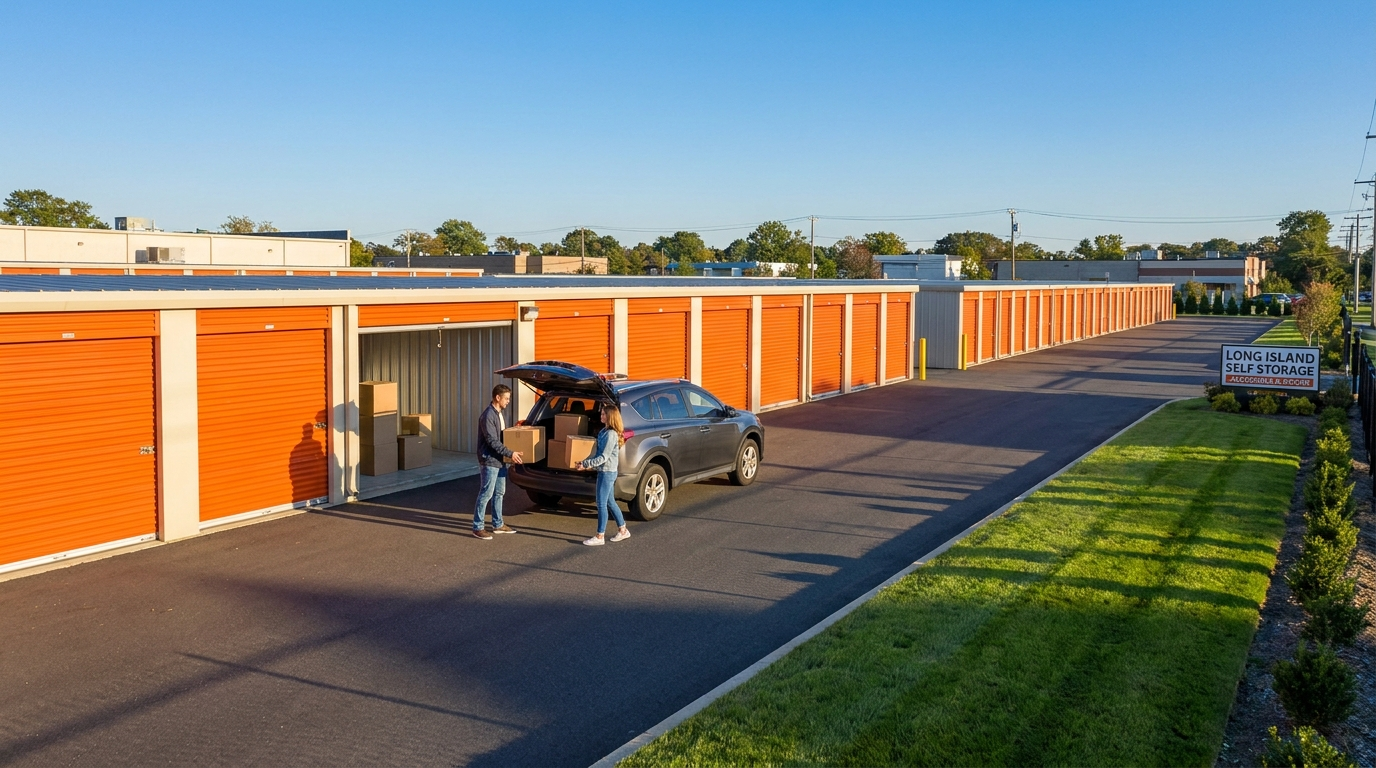
For furniture, appliances, and frequent access, drive-up units provide significant convenience. All units at Moriches Storage feature drive-up access on a fully paved facility, eliminating the hassle of navigating narrow hallways with bulky items.
Climate Control Considerations
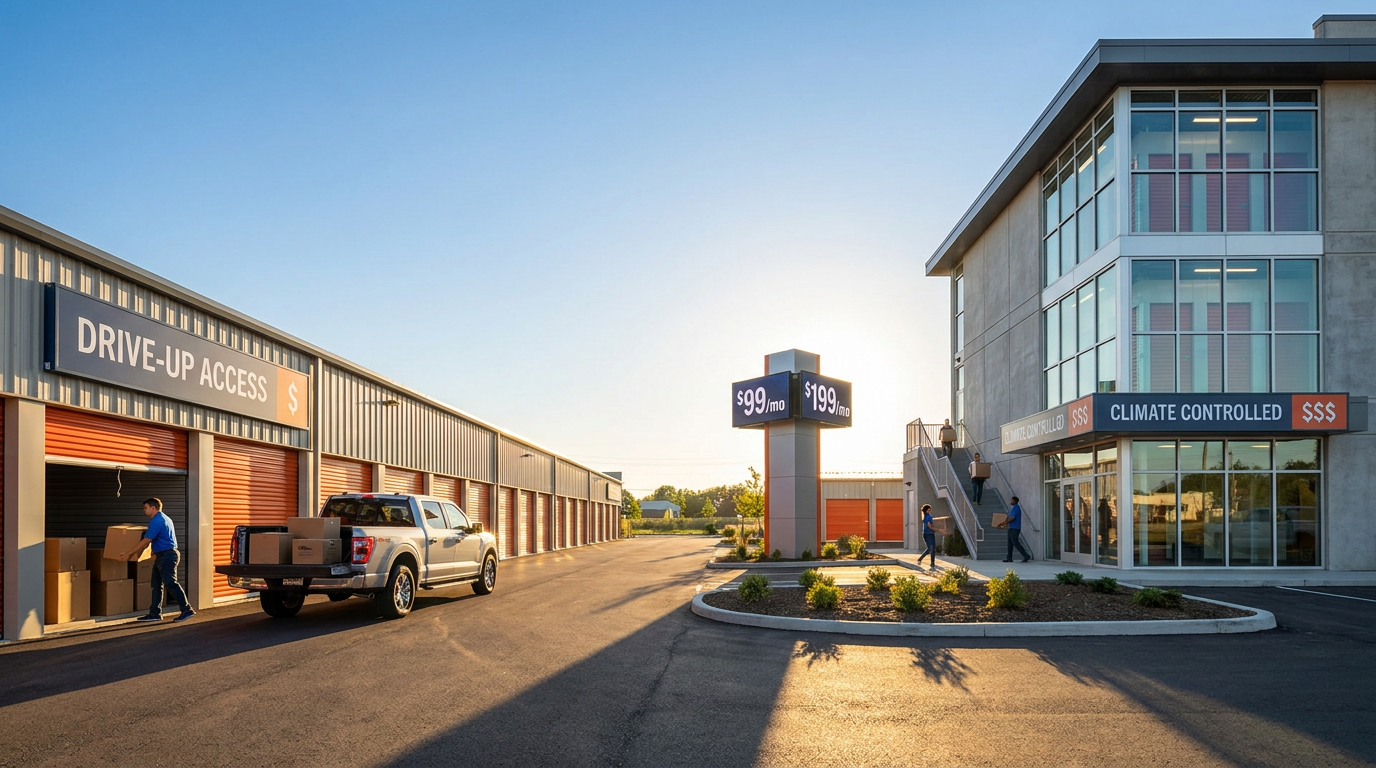
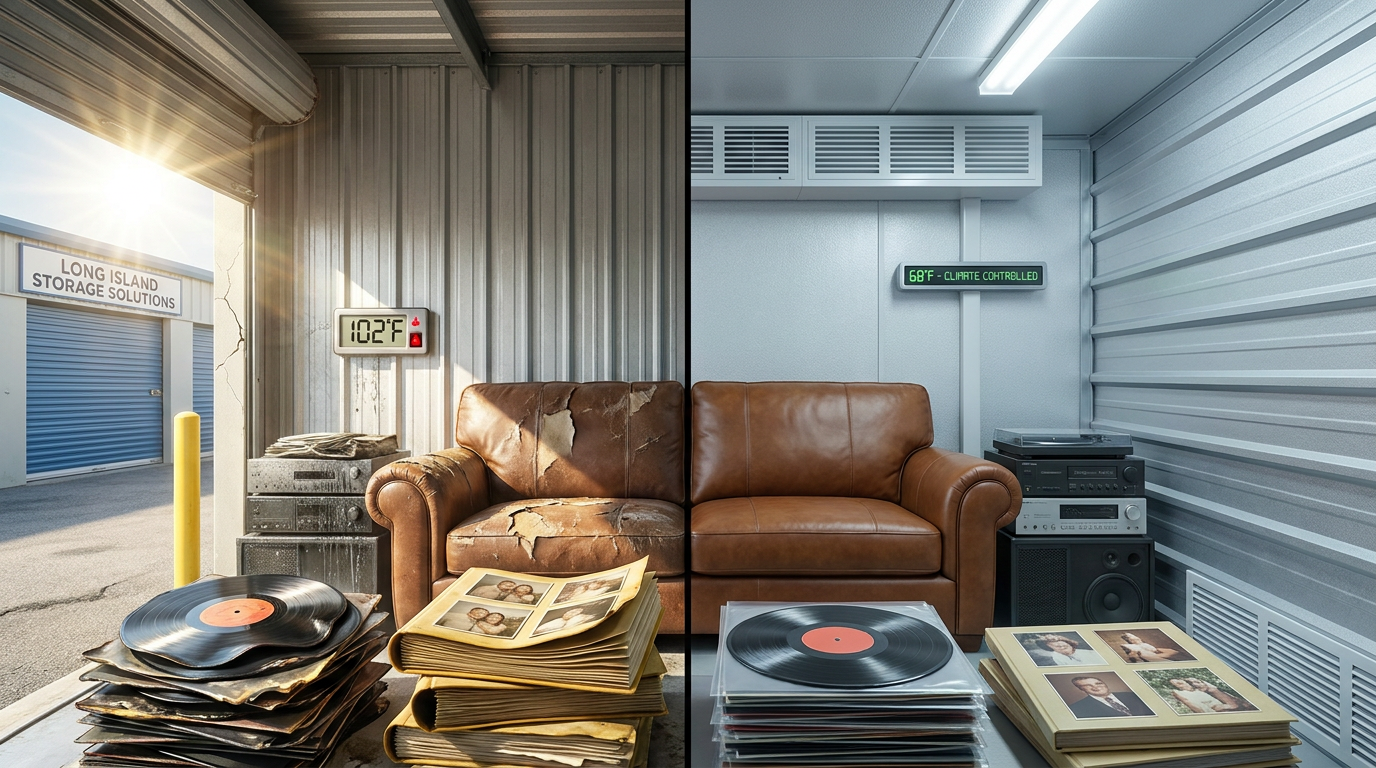
Climate-controlled units maintain temperatures between 55 and 80 degrees Fahrenheit year-round. This feature protects temperature-sensitive items including wooden furniture, electronics, photographs, vinyl records, and leather goods.
Non-climate-controlled units work well for metal items, plastic storage bins, outdoor equipment, and items tolerant of temperature fluctuation. On Long Island, summer temperatures can exceed 90 degrees and winter temperatures drop below freezing, making climate control important for sensitive belongings.
Security Features
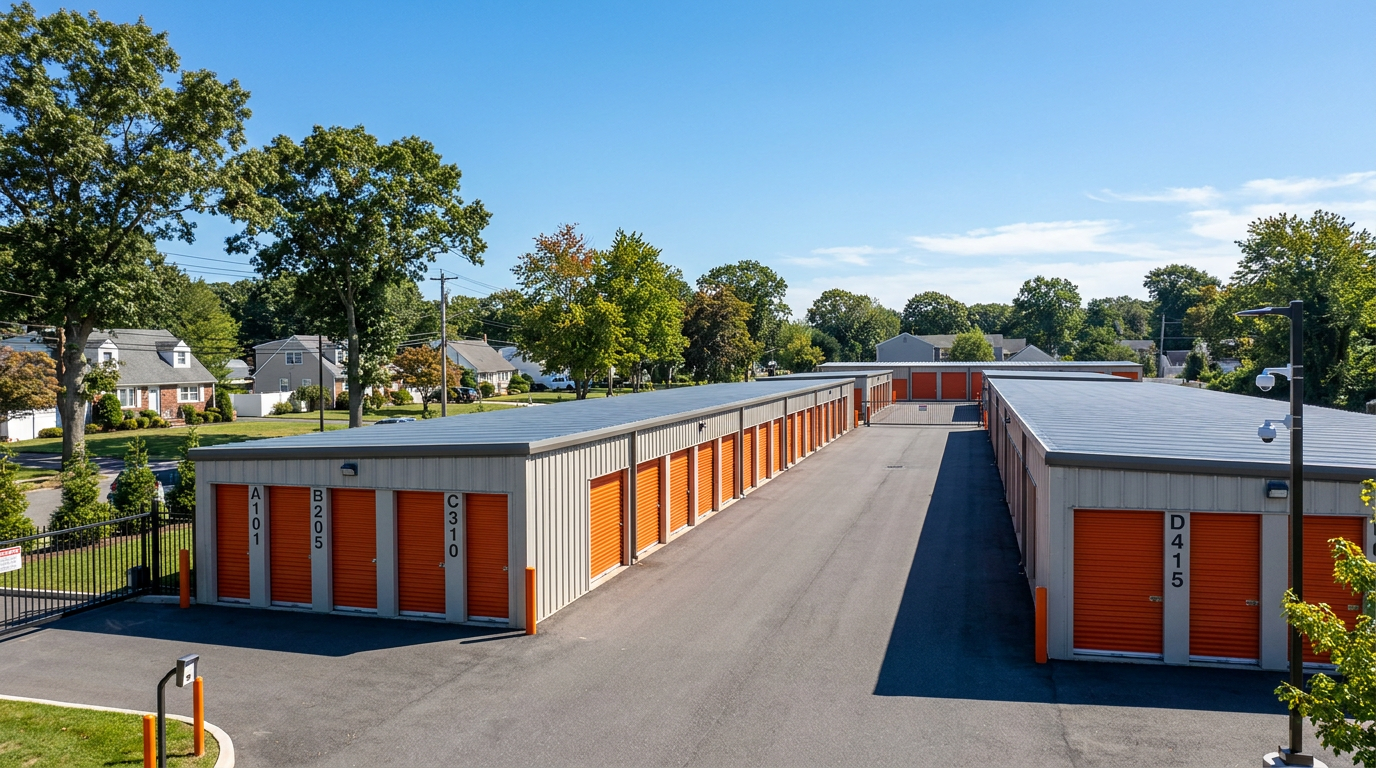
Evaluate security features including gated access, security cameras, lighting, and individual unit alarms. These features protect your belongings and may affect insurance requirements. The Moriches Storage facility features a fully gated and paved property with LED lighting, security cameras, and electronic access control.
Consider tenant protection plans for valuable items. Storage facility insurance typically covers damage from specific perils like fire, theft, and water damage. Review the tenant protection options to understand coverage limits and exclusions.
Storage Unit Size by Use Case
Different storage scenarios have distinct requirements. Use these guidelines to match your specific situation to the appropriate unit size.
College Student Storage
Students storing dorm room contents during summer break typically need a 5x5 unit. This size holds a mini-fridge, microwave, desk chair, bedding, clothing bins, and 10 to 15 boxes. Students with more furniture or shared storage with roommates should consider a 5x10.
Apartment Dweller Storage
Studio apartment contents fit in a 5x10 unit when packed efficiently. One-bedroom apartments require 5x15 to 10x10 units. Two-bedroom apartments need 10x10 to 10x15 units. These estimates assume average furniture density and efficient packing.
Home Storage During Moves
Two-bedroom homes typically require 10x10 units. Three-bedroom homes need 10x15 to 10x20 units. Four-bedroom homes require 10x20 to 10x25 units. Add one size level if storing major appliances or outdoor equipment.
Business and Commercial Storage
Small business inventory storage varies widely by industry. Retail businesses storing seasonal merchandise typically need 10x10 to 10x20 units. Contractors storing tools and equipment often require 10x15 to 10x30 units depending on vehicle storage needs.
Document storage for businesses requires approximately 1 square foot per standard file box. A 5x5 unit holds 200 to 250 file boxes when stacked efficiently. For questions about business storage solutions, contact the Moriches Storage team for personalized recommendations.
Frequently Asked Questions
What size storage unit do I need for a one-bedroom apartment?
A one-bedroom apartment typically requires a 5x10 to 10x10 storage unit, depending on furniture quantity and packing efficiency. Minimally furnished apartments fit in a 5x10 (50 square feet). Fully furnished apartments with major appliances need a 10x10 (100 square feet). Measure your largest furniture pieces to confirm fit.
Can I fit a car in a 10x20 storage unit?
Yes, a 10x20 storage unit accommodates most sedans, compact SUVs, and small trucks. Standard parking spaces measure 9 x 18 feet, so a 10x20 provides adequate clearance for door opening and maneuvering. Larger vehicles like full-size SUVs and trucks may require a 10x25 or 10x30 unit.
How many boxes fit in a 5x5 storage unit?
A 5x5 storage unit holds approximately 50 to 75 medium moving boxes (18 x 18 x 16 inches) when stacked to ceiling height with no furniture. With furniture included, expect to fit 15 to 25 boxes alongside small pieces like chairs, end tables, and storage bins.
Should I rent a larger unit than I think I need?
Rent the size that matches your inventory with 10 to 20 percent buffer for access space. Renting significantly larger wastes money, as the difference between a 5x10 and 10x10 can exceed $100 monthly. Most facilities allow size changes, so start appropriately sized and upgrade only if necessary.
What is the most popular storage unit size?
The 5x10 unit is the most commonly rented size nationwide, accounting for approximately 22 percent of all storage rentals according to industry data. This size balances capacity and cost effectively, holding one bedroom of furniture or 30 to 40 boxes at moderate monthly rates.
How do I know if my furniture will fit through the unit door?
Standard storage unit doors measure 4 feet wide for small units and 8 to 10 feet wide for larger units. Measure your largest furniture piece at its widest point. Sofas, mattresses, and dressers typically require doors at least 4 feet wide. Roll-up doors on drive-up units provide full-width access.
Making Your Final Decision
Choosing the right storage unit size requires balancing capacity needs against budget constraints. Start by inventorying your belongings and measuring large items. Apply the room formula as a baseline, then adjust for access requirements and packing efficiency.
For most residential storage needs on Long Island's South Shore, a 5x10 or 10x10 unit provides the optimal balance of space and value. Seasonal storage and small item collections fit comfortably in 5x5 units. Whole-home storage during moves or renovations typically requires 10x15 to 10x20 units.
Visit the Moriches Storage FAQ page for additional information about the rental process, payment options, and facility access. With month-to-month leases and no deposit required, you can adjust your storage solution as needs change without long-term commitment.
|